







No more SIM kiosks
Skip the airport queues. Install your eSIM at home, activate when you land.


Land connected. No SIM kiosk hunt, no roaming charges, no setup at the airport. One plan covers your whole trip.
 Japan / Kyoto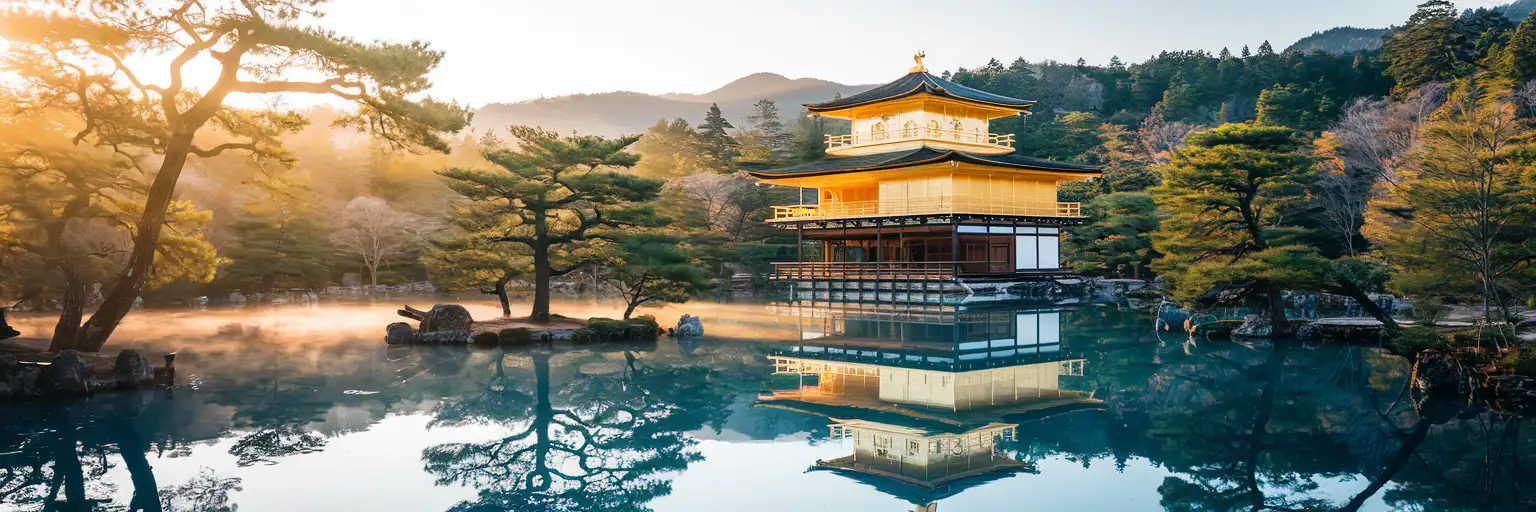
Tell us what you'll do and how long you'll be away — we'll highlight the right plan.
What will you do?

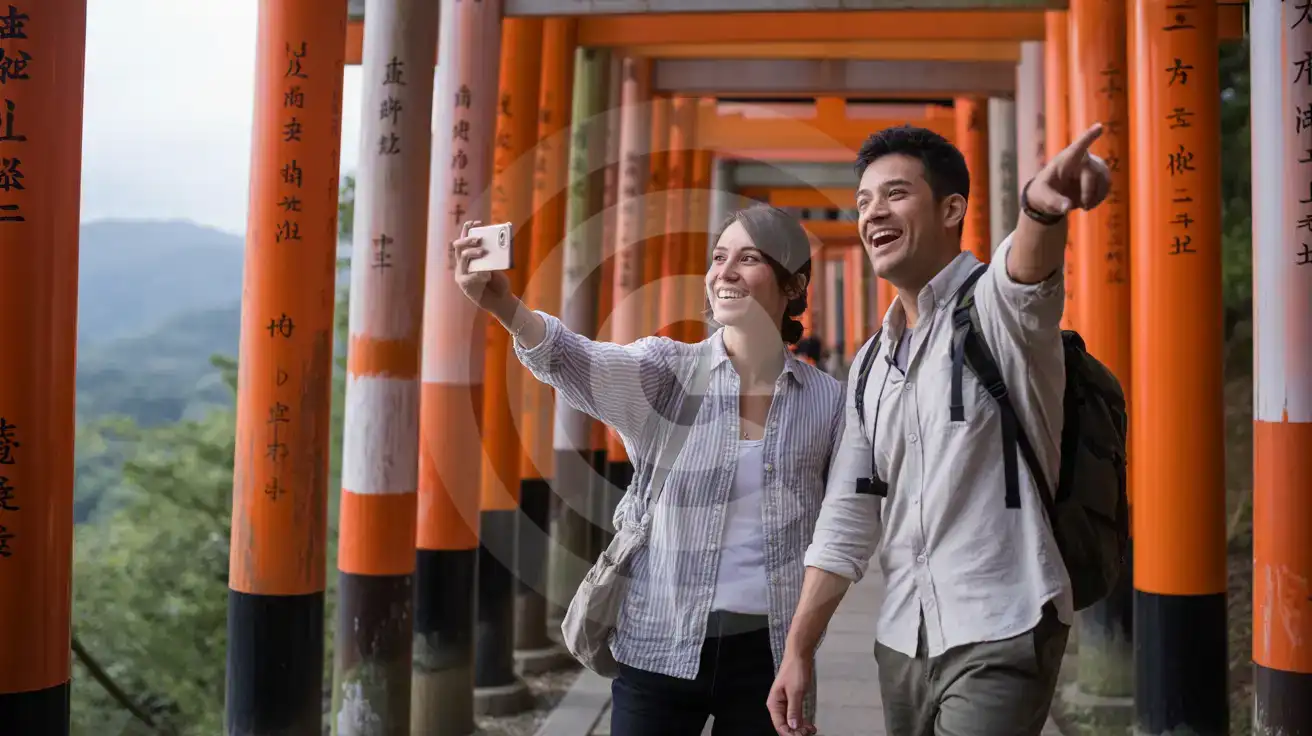
Kyoto's 17 UNESCO World Heritage Sites spread across a city where street signs stay stubbornly in Japanese and Google Translate's camera mode becomes your default reading tool. Walking from Gion's geisha district to the Philosopher's Path looks straightforward on a paper map but involves unmarked canal crossings, hidden shrine entrances, and lanes too narrow for cars — real-time GPS guidance on your phone turns a frustrating wander into a 25-minute stroll past cherry trees.
Timed-entry tickets now control crowds at Kinkaku-ji, Ryoan-ji's rock garden, and the Sanjusangendo hall of 1,001 statues. Each site emails a QR code that the gate scanner reads from your phone screen — no printout, no fumbling. Miss your 10:15 AM slot at Kinkaku-ji and you're rebooking for the next available window, which during peak season may be tomorrow. Your eSIMno plans for Kyoto, Japan keep that QR code loading instantly at the entrance, not buffering on overloaded temple WiFi.
Higashiyama's eastern hillside district packs Kiyomizu-dera, Yasaka Pagoda, and Maruyama Park into a 2 km pedestrian zone where bus routes end and walking takes over. Google Maps' live walking directions save wrong turns into dead-end ryokan alleys. In Arashiyama, the bamboo grove sits 17 minutes from Kyoto Station on the JR Sagano Line (¥240), but the Randen tram (¥220, 24 minutes from Shijo-Omiya) drops you closer to Tenryu-ji's garden entrance — comparing real-time options on your phone beats guessing at the station board.
Kyoto's kaiseki restaurants fill weeks ahead, but same-day cancellations appear on Tableall and Pocket Concierge apps around 3 PM. Refreshing availability over eSIM data while you're walking Pontocho alley can land a 7 PM seat at a counter serving seasonal Kyoto vegetables. Once seated, Google Translate's camera mode deciphers handwritten menus — point your phone at the calligraphy and the English appears overlaid in real time, no embarrassing pointing at pictures.
Japan's ancient imperial capital for over a thousand years, Kyoto anchors Kansai alongside Osaka and Nara, holding more UNESCO World Heritage Sites than any other Japanese city. Where Tokyo rebuilt after earthquakes and war, Kyoto preserved — wooden machiya townhouses line Gion's lantern-lit lanes, moss gardens date to the 14th century, and geiko (Kyoto's geisha) still train in the same ochaya teahouses their predecessors did generations ago.
Higashiyama climbs the eastern hills with Kiyomizu-dera's wooden stage, Yasaka Shrine's vermillion gates, and the stone-paved Ninenzaka slope — the densest temple walking route in the city. Gion straddles the Kamo River with teahouses, machiya cafés, and the Hanamikoji geisha district. Arashiyama spreads west with bamboo groves, the Togetsukyo bridge, and monkey-inhabited hillsides. Downtown's Kawaramachi-Shijo crossing is the commercial core — department stores, covered shopping arcades, and the Nishiki Market fish stalls.
The Kinkaku-ji (Golden Pavilion) reflects in its mirror pond, Fushimi Inari's 10,000 vermillion torii march up a forested mountainside, and the rock garden at Nijo Castle challenges visitors to count all 15 stones from any angle. Arashiyama Bamboo Grove draws photographers at dawn, while Kiyomizu-dera's wooden terrace offers city views best caught at sunset. Tea ceremony experiences, textile workshops dyeing kimono fabrics, and sake brewery tours in Fushimi round out the cultural immersion.
Cherry blossom season (late March to mid-April) and autumn foliage (mid-November) pack hotels and temple queues — book 3 months ahead. Summer (June-August) brings humid 35°C heat and the Gion Matsuri festival in July. Winter (December-February) clears crowds and dusts temple roofs with occasional snow, ideal for contemplative garden visits.
Kyoto's transit mixes JR trains, private railways, city buses, and two subway lines — no single IC card or app covers everything, but Google Maps integrates real-time schedules for all of them.
Kansai International Airport sits 75 minutes south by JR Haruka Express (around ¥2,900-3,600 reserved seat depending on booking), arriving directly at Kyoto Station's platform 30. Airport limousine buses run the same route in 85-105 minutes depending on traffic (around ¥2,600). From Osaka's Itami Airport, the limousine bus reaches Kyoto Station in 50-55 minutes (around ¥1,340).
Kyoto's green city buses blanket the temple circuit — the 100, 101, and 102 routes loop through Higashiyama, Gion, and Kinkaku-ji. Flat fare runs ¥230 per ride; a one-day bus pass (¥700) pays off after three trips. The Karasuma subway line runs north-south through Kyoto Station, while the Tozai line cuts east-west under Sanjo Street. Both lines charge ¥220-360 depending on distance.
The Keihan Line connects Gion-Shijo to Fushimi Inari (2 stops, 5 minutes, ¥150) and continues to Osaka. The Hankyu Line links Kawaramachi to Arashiyama (40 minutes with one transfer, ¥400). JR's Sagano Line reaches Arashiyama from Kyoto Station in 17 minutes (¥240). Within Higashiyama and Gion, walking beats waiting for buses — the 2 km temple walk from Kiyomizu-dera to Yasaka Shrine takes 30-40 minutes on foot through pedestrian-only lanes.
Uber operates in Kyoto but driver availability stays limited compared to Tokyo — Japan Taxi and GO Taxi apps offer wider coverage. Taxis queue at Kyoto Station's Hachijo exit and major temple gates. Expect ¥1,500-2,500 for a 10-15 minute ride across central Kyoto.
 Recommended Recommended | Local SIM / Operator | Roaming | |
|---|---|---|---|
| FEATURES | |||
| Setup time | Few minutes | Store visit + paperwork | Auto |
| No local ID needed | Online checkout | Local ID required | Use home account |
| Speed | 4G/5G | Carrier-grade | Partner-dependent |
| Travel support | English support 24/7 | Japanese only | Home carrier hours |
| Keep home number | Dual SIM | Replaces it | Same number |
| Cost predictability | Fixed price | Bills can spike | Bill-shock risk |
| PRICING | |||
Typical pricing | See plans below | Cheap but Japanese support only | $12-18 / day Typical day-pass tariff varies by home carrier |
No more SIM kiosks
Skip the airport queues. Install your eSIM at home, activate when you land.

No roaming surprises
Forget the $200 phone bill three weeks after your trip. Plain pricing, no hidden fees.

Keep your home number
Dual-SIM means your physical SIM stays active for calls and texts. eSIM handles only data.

Setup in 2 minutes
Scan QR code, follow on-screen steps, you're connected. Works on any eSIM-compatible phone.


Experience seamless global connectivity with our personal eSIM service. Enjoy faster speeds, wider coverage, and the convenience of online purchasing.

Buy a Data Plan
Search for your destination and pick any data plan
Step 1
Install your eSIM
Easy installation via qr code
Step 2
Activate Your eSIM
Only active when you are ready to use data
Step 3
24/7 Customer Support
Reach our team via WhatsApp and email during business hours. Quick answers to common questions available anytime through our automated assistant.
Immediate delivery
Your eSIM arrives by email within minutes. Install it before you board your flight.
Worldwide Coverage
One eSIM, 160+ countries. Land anywhere and connect instantly — no SIM swapping, no roaming charges.
Check Compatibility
Before buying and installing an eSim, check if your phone supports one
As you feel the need to use eSIM on your phone, the first question that arises is: does your mobile support eSIMs? And do eSIM-compatible devices work in all regions worldwide?
Find helpful information to answer your questions

Refer
A FRIEND
Step into the world of E-SIM, bring your friends and benefit together!