


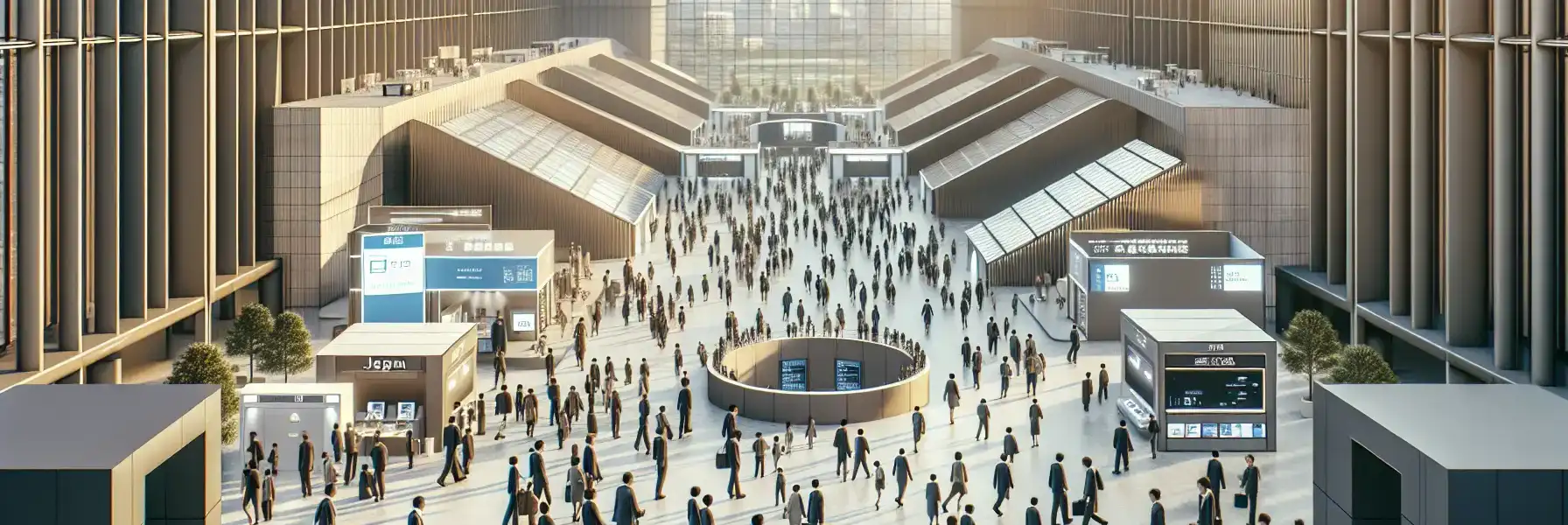




No more SIM kiosks
Skip the airport queues. Install your eSIM at home, activate when you land.


Land connected. No SIM kiosk hunt, no roaming charges, no setup at the airport. One plan covers your whole trip.
 Japan / Osaka
Tell us what you'll do and how long you'll be away — we'll highlight the right plan.
What will you do?

Osaka moves fast enough that offline preparation rarely survives contact with the street. The walk from Namba Station to your Airbnb involves 23 numbered exits, each surfacing into a different block of the Shinsaibashi shopping arcade. Google Maps live navigation gets you to the correct door; guesswork gets you lost in a basement food hall.
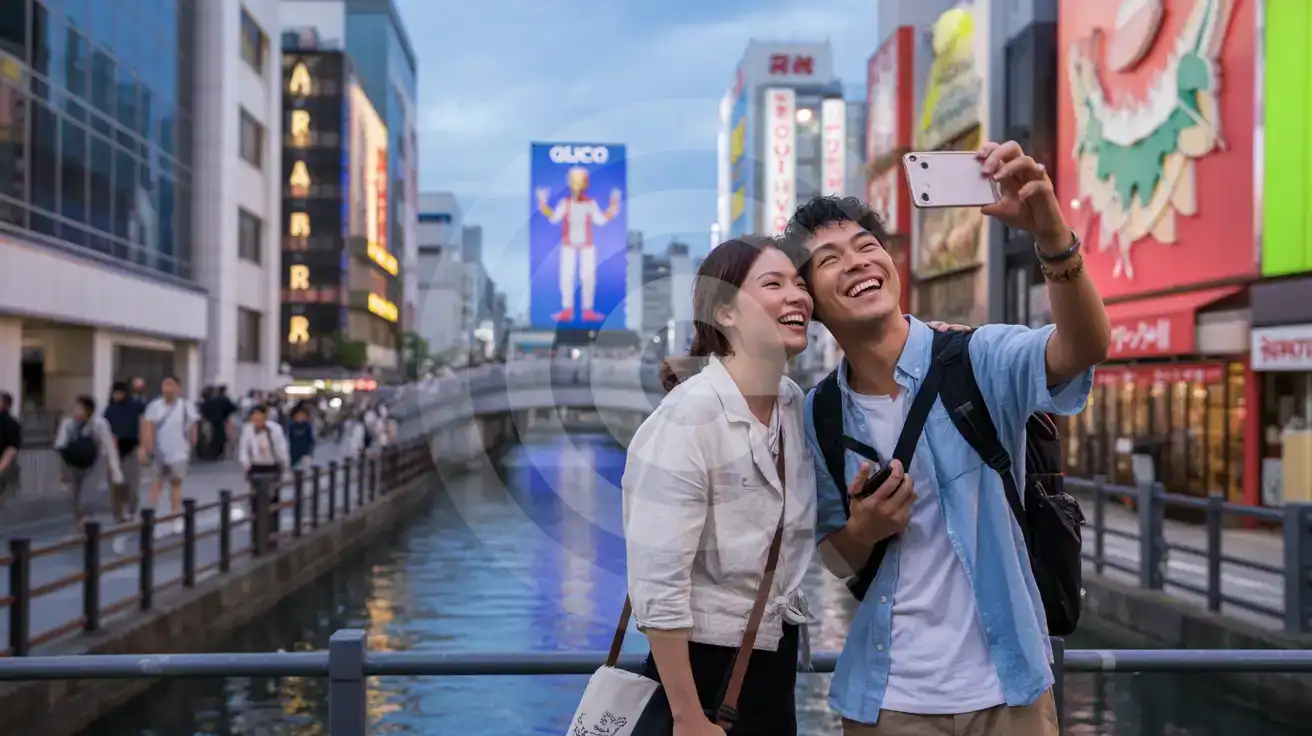
The Glico Running Man sign marks the heart of Osaka's nightlife corridor, but the real action happens in the side alleys. Kushikatsu Daruma on Dotonbori-suji posts current wait times on Tabelog — checking the app before you commit saves 45 minutes standing in a queue that wraps past three storefronts. After dinner, the Don Quijote tax-free counter requires passport scans and receipt QR codes that load faster on cellular than on the store's overloaded WiFi. Walk 8 minutes east and you hit Kuromon Ichiba's 170+ stalls, where Google Lens translates handwritten price tags for sea urchin, Kobe beef skewers, and seasonal fruit that costs more per piece than dinner.
The business district around Osaka Station clusters 11 connected buildings across underground and elevated walkways. The Floating Garden Observatory at Umeda Sky Building requires timed-entry QR codes purchased through the official app — show up without one and the elevator queue adds 40 minutes. Grand Front Osaka's restaurant floors on levels 7-9 fill by 12:15 PM on weekdays; OpenTable and Tabelog reservations made during your morning commute secure the window seats.
The park gates at Universal Studios Japan open at 9:00 AM, but the virtual queue for Super Nintendo World activates at 7:00 AM from anywhere with data. Miss the window and you're waiting standby for 180+ minutes. Express Pass availability updates every 15 minutes through the official USJ app — surge pricing kicks in around 10:30 AM when the Osaka day-trippers arrive. After close, the JR Yumesaki Line back to Nishikujo runs every 12 minutes until 11:47 PM; real-time train tracking beats guessing on a platform packed with tired families.
eSIMno plans for Osaka, Japan keep every screen responsive — from the 6:30 AM express pass grab to the midnight ramen search in Shinsekai.
Osaka earned its reputation as Japan's kitchen through 400 years of merchant culture that valued direct conversation and unapologetic appetite. The local dialect — Osaka-ben — sounds blunter than Tokyo Japanese, the food portions run larger, and the comedy scene at Namba Grand Kagetsu shapes national television. Where Tokyo projects precision, Osaka projects warmth.
Namba and Shinsaibashi form the entertainment core, stacked with arcades, department stores, and the neon chaos of Dotonbori canal. Umeda anchors the northern business district with Osaka Station's 11-building complex and the observation decks at Floating Garden Observatory. Tennoji clusters around Shitennoji Temple (Japan's oldest Buddhist temple, founded 593 AD) and the surprisingly wild Tennoji Zoo. Shinsekai preserves the retro Showa-era atmosphere beneath Tsutenkaku, the 103-meter tower modeled after the Eiffel Tower's first platform.
Osaka Castle draws history visitors to its museum galleries and the 360-degree view from the eighth-floor observation deck. Osaka Aquarium Kaiyukan ranks among the world's largest aquariums with a 5,400-cubic-meter Pacific Ocean tank. Universal Studios Japan hosts Super Nintendo World and the Wizarding World of Harry Potter, each requiring separate timed-entry logistics. Beyond the headliners, travelers come for the street food density — takoyaki at Wanaka, okonomiyaki at Mizuno, kushikatsu at Daruma — and the Hanshin Tigers baseball atmosphere that fills Kyocera Dome 40,000 strong on summer nights.
Kansai International Airport sits on a man-made island in Osaka Bay, 50 km from city center. The JR Haruka Express reaches Tennoji in 35 minutes and continues to Shin-Osaka (50 minutes) for shinkansen connections. The Nankai Rapi:t limited express runs to Namba in 38 minutes with a retro-futuristic interior tourists photograph as much as ride. Airport limousine buses serve major hotels directly — the OCAT terminal in Namba takes 48 minutes depending on highway traffic.
Osaka Metro operates nine lines covering 133 stations. The Midosuji Line (red, north-south) connects Shin-Osaka, Umeda, Shinsaibashi, Namba, and Tennoji — the five stations most visitors use daily. The Yotsubashi Line parallels it one block west with lighter crowds. JR lines circle the city via the Osaka Loop Line, linking Universal City (for USJ) and Kyobashi. IC cards (ICOCA, Suica, Pasmo) work across all systems — tap in, tap out, balance deducts automatically.
Namba to Dotonbori covers 400 meters of covered arcade. Shinsaibashi to Amerikamura takes 8 minutes through pedestrian streets. The city's grid layout and flat terrain make walking practical between stations. GO and DiDi handle ride-hailing; Japan Taxi works in areas the apps don't cover. Surge pricing spikes after concerts at Kyocera Dome and events at Intex Osaka — checking return train times beats waiting for a car that costs triple.
 Recommended Recommended | Local SIM / Operator | Roaming | |
|---|---|---|---|
| FEATURES | |||
| Setup time | Few minutes | Store visit + paperwork | Auto |
| No local ID needed | Online checkout | Local ID required | Use home account |
| Speed | 4G/5G | Carrier-grade | Partner-dependent |
| Travel support | English support 24/7 | Japanese only | Home carrier hours |
| Keep home number | Dual SIM | Replaces it | Same number |
| Cost predictability | Fixed price | Bills can spike | Bill-shock risk |
| PRICING | |||
Typical pricing | See plans below | Cheap but Japanese support only | $12-18 / day Typical day-pass tariff varies by home carrier |
No more SIM kiosks
Skip the airport queues. Install your eSIM at home, activate when you land.

No roaming surprises
Forget the $200 phone bill three weeks after your trip. Plain pricing, no hidden fees.

Keep your home number
Dual-SIM means your physical SIM stays active for calls and texts. eSIM handles only data.

Setup in 2 minutes
Scan QR code, follow on-screen steps, you're connected. Works on any eSIM-compatible phone.


Experience seamless global connectivity with our personal eSIM service. Enjoy faster speeds, wider coverage, and the convenience of online purchasing.

Buy a Data Plan
Search for your destination and pick any data plan
Step 1
Install your eSIM
Easy installation via qr code
Step 2
Activate Your eSIM
Only active when you are ready to use data
Step 3
24/7 Customer Support
Reach our team via WhatsApp and email during business hours. Quick answers to common questions available anytime through our automated assistant.
Immediate delivery
Your eSIM arrives by email within minutes. Install it before you board your flight.
Worldwide Coverage
One eSIM, 160+ countries. Land anywhere and connect instantly — no SIM swapping, no roaming charges.
Check Compatibility
Before buying and installing an eSim, check if your phone supports one
As you feel the need to use eSIM on your phone, the first question that arises is: does your mobile support eSIMs? And do eSIM-compatible devices work in all regions worldwide?
Find helpful information to answer your questions

Refer
A FRIEND
Step into the world of E-SIM, bring your friends and benefit together!