
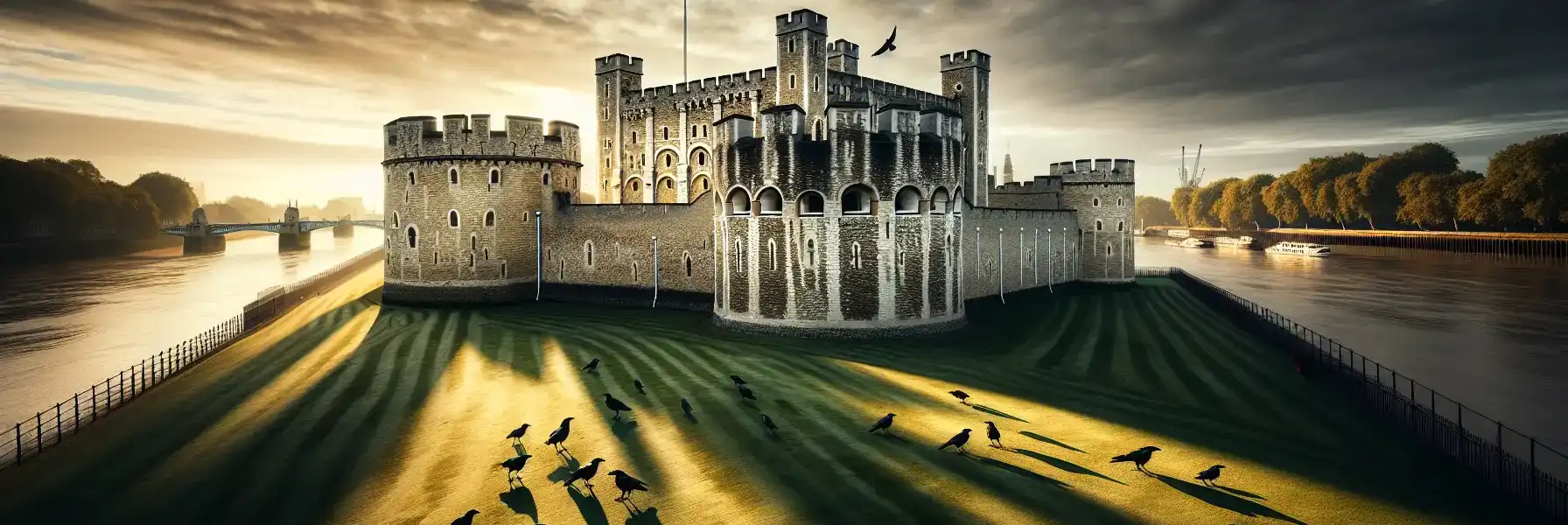
Quick Facts
- Address
- Tower of London, London EC3N 4AB
- Nearest Station
- Tower Hill (District & Circle lines)
- Hours (Mar-Oct)
- Tue-Sat 09:00-17:30, Sun-Mon 10:00-17:30
- Hours (Nov-Feb)
- Tue-Sat 09:00-16:30, Sun-Mon 10:00-16:30
- Adult Ticket
- ~£35 online (book in advance)
- Child Ticket (5-15)
- ~£17.50 online
- Under 5
- Free
- Recommended Duration
- 3-4 hours
- Official Website
- hrp.org.uk/tower-of-london
- eSIMno Networks
- Everything Everywhere, O2, Three
About the Tower of London
The Tower of London began as an assertion of dominance. When William the Conqueror defeated King Harold at the Battle of Hastings in October 1066, he marched on London and immediately ordered construction of a fortress that would remind the Anglo-Saxon population exactly who ruled them now. The White Tower — the central keep that gives the entire complex its name — was completed around 1078 under the direction of Gundulf, Bishop of Rochester. Built from Caen stone shipped across the Channel from Normandy and pale Kentish ragstone quarried locally, the structure rises roughly 27 metres and remains one of the most complete Norman keeps in existence.
The fortress expanded dramatically over subsequent centuries. Richard the Lionheart added the curtain wall and the Bell Tower in the 1190s. Henry III, during his 56-year reign, constructed the inner curtain wall, the Wakefield Tower, and the Lanthorn Tower, transforming the site from a single keep into a concentric fortress. Edward I completed the transformation between 1275 and 1285 by adding the outer curtain wall, the moat (later drained in 1843), and the infamous Traitors' Gate — the watergate through which prisoners arrived by barge from Westminster.
But the Tower's significance extends far beyond its architecture. Across nearly a thousand years, these walls have served as royal residence, armoury, treasury, mint, public records office, observatory, and menagerie. The Royal Mint operated here from 1279 until 1810. The royal menagerie — which at various points housed lions, an elephant gifted by Louis IX of France, and a polar bear that fished in the Thames — remained until 1835, when the animals were transferred to the newly established London Zoo.
Most infamously, the Tower served as a state prison and execution site. The list of prisoners reads like a roll call of English history: Anne Boleyn, beheaded on Tower Green in 1536 after failing to produce a male heir for Henry VIII. Her cousin Catherine Howard, executed on the same spot six years later. Sir Thomas More, who refused to acknowledge Henry VIII as head of the Church of England. Lady Jane Grey, the Nine Days' Queen, executed at 16 or 17. Sir Walter Raleigh, who spent 13 years in the Bloody Tower writing his History of the World. Rudolf Hess, Hitler's deputy, who was held briefly in 1941 after his bizarre solo flight to Scotland — the Tower's last prisoner.
Two young princes — Edward V and his brother Richard, Duke of York — were last seen playing in the Tower grounds in 1483 before vanishing entirely, presumed murdered on orders of their uncle Richard III. Bones discovered beneath a staircase in 1674 were assumed to be theirs and reburied in Westminster Abbey, though the mystery remains officially unsolved.
The Tower of London was inscribed as a UNESCO World Heritage Site in 1988, recognized for its role in the institutional development of Britain and its outstanding architectural significance as a model of medieval military architecture. Today it is administered by Historic Royal Palaces, an independent charity, and attracts approximately 3 million visitors annually — making it one of the most visited historic sites in the United Kingdom.
Highlights & Must-See Attractions
The Crown Jewels in the Jewel House, Waterloo Block
The Crown Jewels represent the single most visited attraction within the Tower, and with good reason. This collection of 23,578 gemstones includes the regalia used in coronations from Charles II to Charles III. The centrepieces are staggering: the Imperial State Crown contains the 317-carat Cullinan II diamond (the Second Star of Africa), the Black Prince's Ruby (actually a 170-carat spinel), and the Stuart Sapphire. The Sovereign's Sceptre with Cross holds the 530-carat Cullinan I — the largest clear-cut diamond in the world. The Coronation Spoon, used to anoint monarchs with holy oil, dates from the 12th century and is the oldest piece in the collection, having somehow survived Cromwell's destruction of the original Crown Jewels in 1649.
Visitors pass the most important regalia on a moving walkway — a practical solution to manage the 2.5 million annual viewers. The walkway moves slowly enough to appreciate the pieces but prevents anyone from stopping indefinitely in front of the Imperial State Crown.
The White Tower and the Line of Kings
The Norman keep at the complex's heart houses the Royal Armouries' Line of Kings exhibition — one of the oldest visitor attractions in the world, having welcomed tourists since at least 1660. The display includes royal armours worn by Henry VIII (his foot combat armour from around 1520 is a highlight, showing his athletic 29-year-old physique before the weight gain of later years), Charles I, and James II. The upper floors contain the medieval weapons collection, including swords, polearms, and crossbows arranged by period and function.
The Chapel of St John the Evangelist
On the first floor of the White Tower, the Chapel of St John represents one of the finest surviving Norman ecclesiastical interiors in England. Built around 1080, its rounded Romanesque arches, thick columns, and tunnel-vaulted aisles have remained virtually unchanged for nearly a millennium. The simplicity is striking — no stained glass, no elaborate decoration, just pale stone and the geometry of early medieval worship. Mary I married Philip II of Spain by proxy in this chapel in 1554.
Tower Green and the Scaffold Site
A small patch of lawn marks where the most high-profile executions took place. Private beheadings here — rather than public ones on Tower Hill outside the walls — were reserved for the highest-ranking prisoners. A glass memorial sculpture by artist Brian Catling, installed in 2006, commemorates those executed on this site. The adjacent Chapel Royal of St Peter ad Vincula (St Peter in Chains) contains the burials of Anne Boleyn, Catherine Howard, and Lady Jane Grey, along with approximately 1,500 others interred over the centuries. The chapel is accessible only via Yeoman Warder tour or during services.
The Bloody Tower and Traitors' Gate
Named for its association with the Princes in the Tower, the Bloody Tower served as Sir Walter Raleigh's residence during his 13-year imprisonment. His study has been reconstructed to show the conditions in which he wrote his ambitious History of the World. Below, Traitors' Gate — the watergate set into St Thomas's Tower along the Thames frontage — provided the river entrance through which accused prisoners were brought from trials at Westminster. The low arch and dark passage retain a palpable atmosphere, especially at quieter moments.
The Ravens and the Ravenmaster
Six ravens (plus at least one spare) are kept at the Tower under the care of a dedicated Ravenmaster, a position held by one of the Yeoman Warders. Legend holds that if the ravens ever leave, the Crown will fall and Britain with it — a superstition likely dating to the Victorian era but now thoroughly institutionalized. The ravens are usually visible near the South Lawn or around the Wakefield Tower. Their wings are clipped slightly to discourage departure, though they can still fly short distances. Each raven has a coloured leg band and a name; current residents include Jubilee, Harris, Gripp, and Branwen.
The Beauchamp Tower
This tower contains some of the most elaborate prisoner graffiti in the complex — carvings made by high-status Tudor prisoners awaiting their fate. The most famous inscription belongs to John Dudley, Earl of Warwick, who carved the Dudley family crest into the wall before his execution in 1553. The graffiti provides an unexpectedly intimate connection to individuals who might otherwise remain abstract historical figures.
The Medieval Palace
Reconstructed rooms in St Thomas's Tower and the Wakefield Tower show how Edward I would have lived in the Tower during the late 13th century. The Wakefield Tower's throne room includes a reproduction of the coronation throne, while the oratory features a stunning painted ceiling. The rooms offer context for understanding the Tower as a royal residence rather than purely a prison.
Visit Strategy: Timing, Tickets & Crowd Avoidance
The Crown Jewels Queue Problem
Everything about timing your Tower visit revolves around one reality: the Crown Jewels queue. By mid-morning on any reasonably popular day, the wait can exceed 45 minutes. During summer weekends and school holidays, it can stretch past an hour. The solution is simple but requires commitment: arrive at opening.
On Tuesday through Saturday from March through October, the gates open at 09:00. Position yourself at the Middle Tower entrance by 08:45. When the gates open, walk directly past the ticket barriers and head straight to the Waterloo Block. You should be among the first 100 visitors in the Jewel House. At this hour, you can pause at each display case, circle back for a second look, and still be done within 30 minutes.
Best Days to Visit
Tuesday through Thursday are consistently the quietest weekdays. Friday afternoons pick up as weekend tourists arrive early. Saturday is the busiest day. Sunday offers a slightly later opening (10:00) but can be moderately busy. Monday follows the Sunday schedule and sits somewhere in between.
Seasonal patterns matter significantly. Late autumn (November) and the January-February period after the holidays represent the quietest time to visit. August, Christmas markets season (late November through December), and Easter week are the most crowded.
Ticket Strategy
Standard adult admission runs approximately £35 when booked online in advance — and you should always book online. Walk-up prices are higher, and during peak periods, timed entry slots can sell out entirely. Children aged 5-15 pay roughly half price; under-5s enter free. Family tickets offer modest savings for two adults and up to three children.
If you plan to visit other Historic Royal Palaces sites — Hampton Court Palace, Kensington Palace, Kew Palace, the Banqueting House, or Hillsborough Castle — annual membership (around £65 per adult) pays for itself with just two visits and includes unlimited entry year-round.
Recommended Visit Duration
Plan for 3-4 hours to see the major highlights without rushing. A thorough visit covering every tower, both chapels, the full Medieval Palace, and time to observe the ravens comfortably fills 4-5 hours. A compressed visit hitting only the Crown Jewels, White Tower, and one Yeoman Warder tour can be accomplished in 2-2.5 hours, though you'll miss significant portions of the site.
The Yeoman Warder Tour
Free with admission, Yeoman Warder-led tours depart every 30 minutes from near the Middle Tower entrance. Each tour lasts approximately one hour and covers the major historical sites with considerable theatrical flair — the Warders are selected partly for their storytelling abilities. The tour ends at the Chapel Royal of St Peter ad Vincula, which is otherwise inaccessible except during services. Starting your visit with the 09:30 or 10:00 tour after seeing the Crown Jewels at opening provides an excellent structural framework.
Photography Rules
Personal photography is permitted throughout most of the complex, including the White Tower interior, outdoor areas, and most exhibitions. Photography is strictly prohibited inside the Jewel House. No exceptions, no sneaky attempts — the guards take this seriously. Flash photography and tripods are not permitted in the Chapel Royal of St Peter ad Vincula or the Chapel of St John the Evangelist. Drones are prohibited.
Weather Considerations
Much of the Tower visit takes place outdoors — the inner ward, Tower Green, the walls, and the approach between towers. British weather being British weather, rain is always possible. Layers and a waterproof jacket serve you well. The White Tower, Jewel House, and various tower interiors provide shelter, but expect to be outside for at least half your visit. In winter, the cobblestones can be slippery when wet.
Site Walk-Through & Photographer's Guide
Recommended Walk Sequence
Enter through the Middle Tower and across the causeway (formerly spanning the moat) to the Byward Tower. At 09:00 opening, resist all temptation to explore and proceed directly through the inner ward to the Waterloo Block for the Crown Jewels. With the Jewels completed, double back to the Middle Tower entrance area to join the first Yeoman Warder tour — typically the 09:30 departure.
After the tour concludes at the Chapel Royal of St Peter ad Vincula, you'll be positioned near Tower Green. Take time here with the scaffold memorial, then enter the Beauchamp Tower to see the prisoner graffiti. From there, walk the inner wall section accessible between the Beauchamp Tower and the Bloody Tower, which offers elevated views over Tower Green and the inner ward.
Enter the Bloody Tower from the wall walk and explore Raleigh's study before descending to the inner ward level. Continue to the Wakefield Tower and St Thomas's Tower for the Medieval Palace rooms. Exit St Thomas's Tower to see Traitors' Gate from the inner ward perspective.
Finally, enter the White Tower. Work through the ground floor's introduction and the Line of Kings displays before ascending to the Chapel of St John on the first floor and the upper armour galleries. The White Tower makes a fitting conclusion — you've absorbed the site's history and now see the Norman core that started it all.
Key Structures to Spend Time At
The Jewel House, Waterloo Block: Beyond the main regalia, look for the Exeter Salt (1630), the gold State Trumpets, and the Maundy dishes. The introductory displays explain the coronation sequence.
Chapel of St John the Evangelist: Stand at the entrance and let your eyes adjust to the dim interior. Notice how the ambulatory wraps around the apse — a design allowing processions to circle the altar. The proportions are deceptively sophisticated.
The Beauchamp Tower: The prisoner inscriptions repay close examination. Thomas Talbot's elaborate carving includes the complete Talbot coat of arms. Philip Howard, Earl of Arundel, carved his name and the phrase 'Quanto plus afflictionis' (the more affliction).
Traitors' Gate: View it twice — once from above (from the inner ward walkway) and once from below at water level. The gate's psychological power came from its role as the point of no return.
The Martin Tower: Now housing the 'Crowns and Diamonds' exhibition showing objects no longer used in coronations, including the elaborate frame of Queen Victoria's Small Diamond Crown.
Best Photo Spots & Lighting Times
Morning light (09:00-11:00) illuminates the White Tower's southern facade beautifully when shooting from the inner ward near the scaffold site. The composition including Tower Green's lawn in the foreground and the Norman keep rising behind works best before 10:30, when crowds thin the clean sightlines.
For the classic exterior shot from the Thames Path on the south bank, afternoon light (14:00-17:00) catches the Tower's river frontage. Walk to the Queen's Walk east of Tower Bridge for unobstructed views with the Tower in full sun and Tower Bridge framing the composition.
Ravens photograph best between 10:00 and 14:00 when they're most active on the South Lawn. They're accustomed to visitors but don't appreciate being crowded — a 70-200mm lens lets you capture detail without stressing the birds.
The interior of the Chapel of St John is extremely low-light. A fast lens (f/2.8 or wider) and high ISO capability help; tripods aren't permitted, so brace against a column. The window light from the east creates gentle modelling on the columns around midday.
Restoration & Excavation Status
Historic Royal Palaces conducts ongoing conservation work throughout the site. Scaffolding appears seasonally on various towers for stonework restoration — the Develin Tower and the Flint Tower have received recent attention. The moat area, now a grassy dry moat, occasionally sees archaeological investigation when maintenance work reveals new material. Interior conservation in the White Tower focuses on climate control for the armour collections. Check the HRP website before visiting if photographic coverage of a specific tower is important to you.
Souvenirs & On-Site Shopping
The main gift shop near the exit offers the expected range of replica armour, Tudor rose merchandise, and raven-themed items. What's worth buying: the Historical Royal Palaces publications, particularly the guidebooks produced in partnership with scholarly presses, offer genuine depth beyond typical souvenir fare. The replica Ravenmaster's keys make a distinctive gift. The Crown Jewels ornament reproductions, while kitsch, are well-made.
Skip the cheap plastic swords (they're everywhere in London) and the generic 'London' merchandise that has nothing to do with the Tower specifically. The Tower's exclusive items — anything marked HRP exclusive or featuring the Ravenmaster's signature — hold more lasting interest.
Nearby Attractions & Logistics
Getting to the Tower
Tower Hill station on the District and Circle lines sits approximately 5 minutes' walk from the main entrance. Exit the station, cross the pedestrian plaza, and the ticket office appears directly ahead. Tower Gateway DLR station offers an equally convenient alternative, particularly useful if arriving from Canary Wharf or Greenwich. Numerous bus routes stop on Tower Hill, including the 15, 42, 78, 100, and RV1.
Thames Clippers river boats stop at Tower Pier immediately adjacent to the Tower — an excellent option if arriving from Westminster, the South Bank, or Greenwich. The pier provides the most atmospheric approach, with views of Traitors' Gate from the water. From Monument station (Northern and District lines), the walk takes approximately 10 minutes. London Bridge station (Northern, Jubilee lines and National Rail) sits 15 minutes' walk across Tower Bridge.
Tower Bridge
The Victorian bascule bridge completed in 1894 stands three minutes' walk from the Tower exit. The Tower Bridge Exhibition (approximately £13 adult admission) includes the high-level glass floor walkways suspended 42 metres above the Thames — vertiginous but compelling — and access to the original Victorian engine rooms that powered the hydraulic lifting mechanism. Bridge lifts occur several times weekly; the schedule is published online and watching a lift from the walkways makes the visit worthwhile.
HMS Belfast
Cross Tower Bridge and turn right along the Queen's Walk to reach this Royal Navy light cruiser, now a branch of the Imperial War Museum. Launched in 1938 and active through WWII and Korea, the ship offers nine decks to explore, from the bridge and operations room to the engine rooms and gun turrets. Allow 2 hours. Adult admission approximately £25.
St Katharine Docks
Five minutes' walk east of the Tower, this historic dock complex provides a calm counterpoint to the tourist intensity. The marina hosts historic vessels, the Dickens Inn offers reliable pub food in a reconstructed 18th-century warehouse, and waterside restaurants line the basin. It's a sensible lunch option — less crowded and less expensive than the immediate Tower vicinity.
The Monument
Ten minutes' walk west along Lower Thames Street, Sir Christopher Wren's 62-metre Doric column commemorates the Great Fire of London in 1666. The column stands exactly 62 metres from the fire's origin point in Pudding Lane. 311 steps lead to a viewing platform with panoramic City views. Admission approximately £6.
All Hallows by the Tower
Two minutes' walk from the Tower entrance, this church holds claim to being the oldest in the City of London, founded in 675 AD. Saxon arches survive in the crypt. William Penn — founder of Pennsylvania — was baptised here; John Quincy Adams married here. Entry is free, and the peaceful interior offers respite from the Tower crowds.
Suggested Day Itinerary
Arrive at Tower of London 08:45, enter at 09:00 opening, head directly to Crown Jewels. Join 09:30 Yeoman Warder tour. Explore remaining towers independently until 13:00. Lunch at St Katharine Docks. Walk across Tower Bridge, optional Tower Bridge Exhibition. Continue along South Bank to HMS Belfast (14:30-16:30). Return via London Bridge for sunset views of the Tower from the north bank, or continue west toward Borough Market and Southwark Cathedral for dinner.
Why Data Matters at the Tower of London
The Tower of London sprawls across 12 acres with over 20 individual towers, multiple chapels, and exhibition spaces that don't follow intuitive modern layouts. On-site signage helps, but real-time navigation — checking the Yeoman Warder tour schedule, pulling up historical context for the inscription you're looking at, or finding the shortest route from the Bloody Tower to the White Tower — requires data access.
Free WiFi coverage inside the fortress walls is inconsistent. The Jewel House interior has no signal. Much of the inner ward sits in a connectivity dead zone created by the thick medieval walls. Reliable mobile data solves this entirely.
With an eSIMno plan connecting through Everything Everywhere, O2, or Three, you'll have coverage throughout the site. Download the Historic Royal Palaces app (which includes audio guide content and interactive maps) before entering. Use Google Translate to read Latin inscriptions on prisoner graffiti. Share photos to the group chat while standing on the spot where Anne Boleyn was executed rather than waiting until you're back at your hotel. Check train times for your onward journey while sitting in the Tower's cafe.
It's not about being glued to your phone — it's about having information when you need it, then putting the phone away and experiencing the space. The Tower rewards preparation and context. Data access provides both.
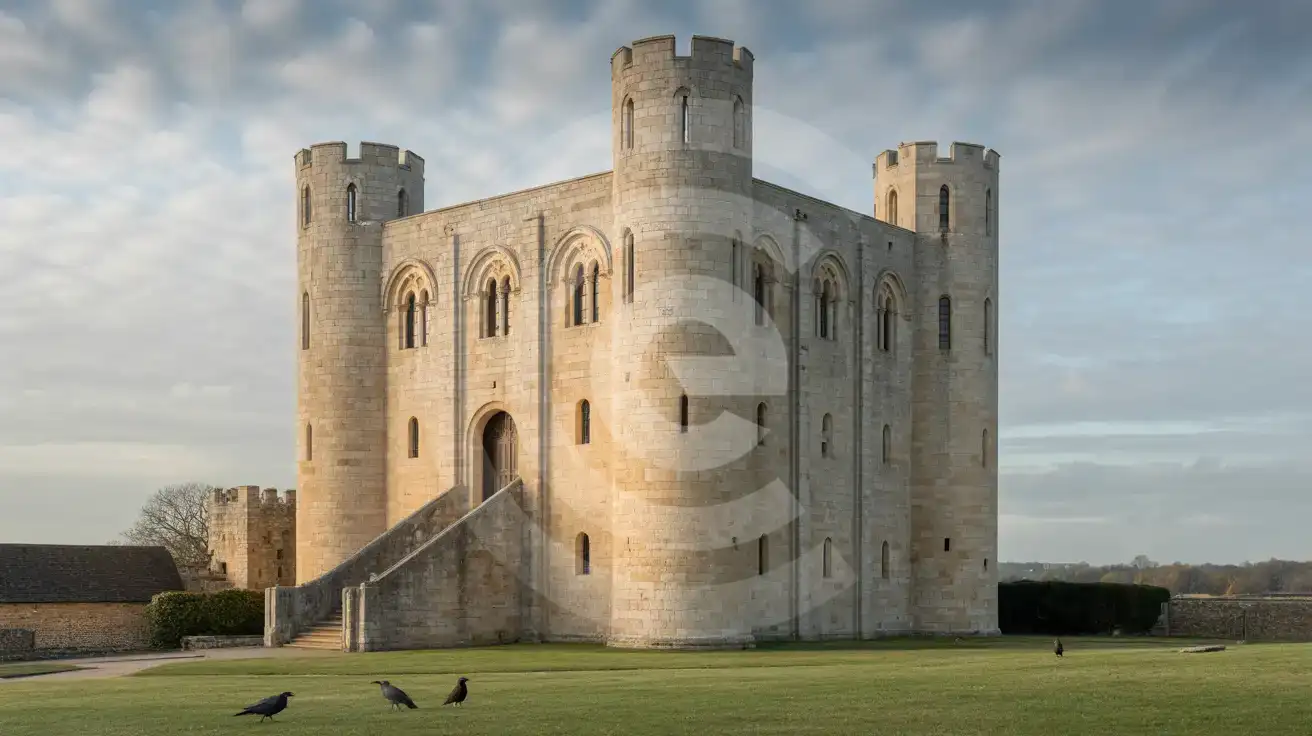
The White Tower at Dawn
Compare WiFi Options at Tower of London
 Recommended Recommended | Local SIM / Operator | Roaming | |
|---|---|---|---|
| FEATURES | |||
| Setup time | Few minutes | Store visit + paperwork | Auto |
| No local ID needed | Online checkout | Local ID required | Use home account |
| Speed | 4G/LTE; 5G in some areas | Carrier-grade | Partner-dependent |
| Travel support | English support 24/7 | Operator shops and call centre | Home carrier hours |
| Keep home number | Dual SIM | Replaces it | Same number |
| Cost predictability | Fixed price | Bills can spike | Bill-shock risk |
| PRICING | |||
Typical pricing | See plans below | — | — |
PRICING — PICK YOUR ESIMNO PLAN
Destination overview
Frequently Asked Questions
Featured eSIM plans
BritMobile

BritMobile
BritMobile
BritMobile
BritMobile
BritMobile
BritMobile
BritMobile