







No more SIM kiosks
Skip the airport queues. Install your eSIM at home, activate when you land.


Land connected. No SIM kiosk hunt, no roaming charges, no setup at the airport. One plan covers your whole trip.
 Japan / Hokkaido
Tell us what you'll do and how long you'll be away — we'll highlight the right plan.
What will you do?

Hokkaido's geography stretches 83,450 square kilometers — larger than Ireland — and public transit thins quickly outside Sapporo. The JR Hokkaido network connects major hubs, but seat reservations on limited-express trains like the Kamui (Sapporo to Asahikawa, 85 minutes) or the Hokuto (Sapporo to Hakodate, 3 hours 50 minutes) require the JR East app or a ticket-machine transaction that flows faster with live translation. Real-time schedule updates matter when winter storms delay departures; push notifications beat platform announcements you can't read.
Sapporo's three subway lines (Namboku, Tozai, Toho) intersect at Odori Station beneath the 1.5-kilometer Odori Park. The Pole Town and Aurora Town underground shopping arcades extend the network; Google Maps indoor navigation prevents wrong-exit confusion. Nijo Market's 60+ seafood stalls accept cash only — currency-converter apps help budget the ¥3,000–¥5,000 kaisendon (seafood rice bowl) splurge. Rideshare apps like Japan Taxi fill gaps when the Susukino bars empty at 2 AM and subway service has stopped.
The drive from New Chitose to Niseko covers 100 kilometers of Route 230 through Nakayama Pass — live traffic and chain-requirement alerts on Google Maps beat static signage. Niseko United's four-resort app tracks lift queues, avalanche closures, and grooming schedules across 2,191 acres of terrain. Furano Ski Resort sits 2 hours northeast; the Furano Ropeway schedule and peak-hour wait times load on the resort dashboard. Data keeps your group chat synced when half the party wants powder laps and the other half wants onsen soaks at Hilton Niseko Village.
Otaru Canal sits 40 minutes by JR from Sapporo — the return train timetable loads instantly when you're ready to leave the sushi street. Asahiyama Zoo (Asahikawa, 1 hour 25 minutes by limited express) requires timed-entry booking for the penguin walk (December–March, 11 AM and 2:30 PM slots); your confirmation QR lives on your phone. Lake Toya's volcanic caldera and Shikotsu-Toya National Park trails demand offline map caching before you lose signal — but eSIMno plans for Hokkaido, Japan keep you connected at the lake's visitor center and the Usuzan Ropeway summit station where KDDI macro towers hold coverage.
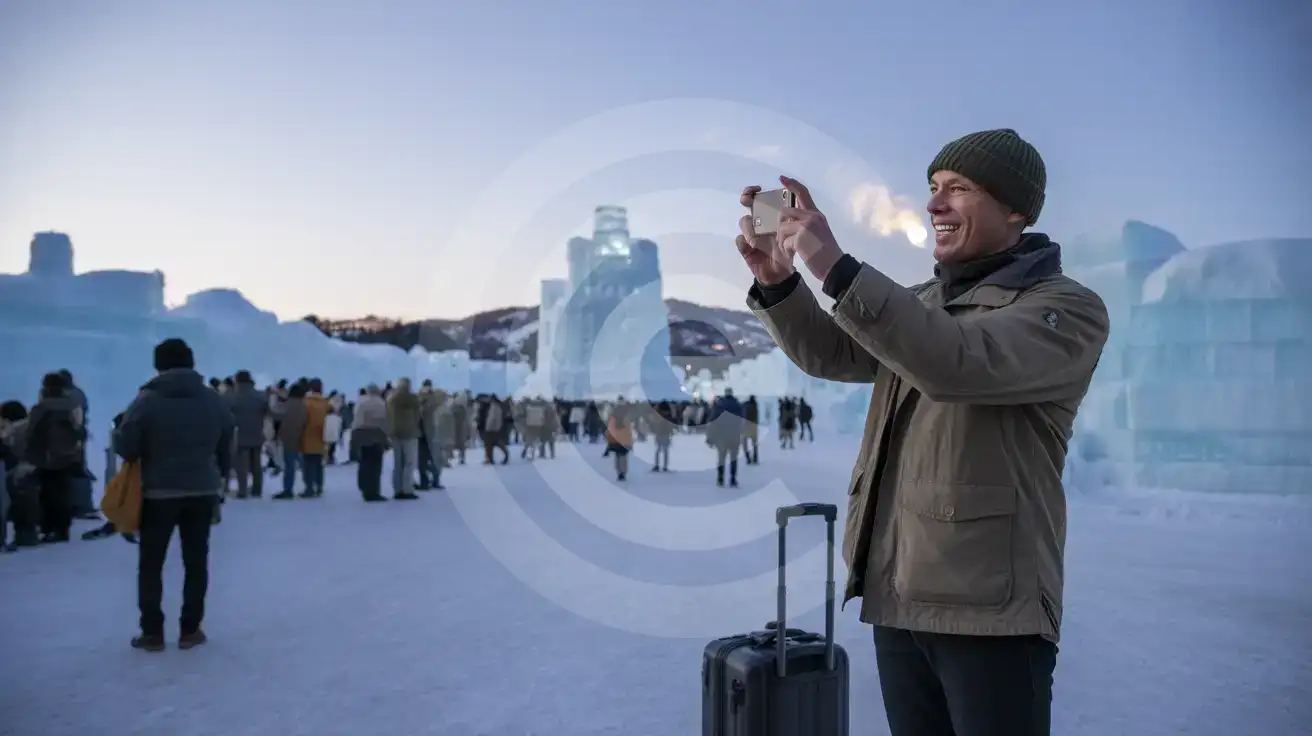
Japan's northernmost main island trades Honshu's urban density for volcanic peaks, dairy farms, and some of Asia's deepest powder snow. Sapporo anchors the region with 2 million residents, a grid-pattern downtown, and the annual Sapporo Snow Festival (early February) that draws 2 million visitors to Odori Park's ice sculptures.
Odori & Tanuki-koji — Sapporo's commercial core stretches from Sapporo Station south to Susukino. The 1.5-kilometer Odori Park splits the grid; Tanuki-koji's covered arcade runs parallel with 200+ shops. Susukino — Hokkaido's largest entertainment district packs ramen alleys, izakayas, and neon signage into a 1-square-kilometer zone south of Odori. Otaru — a 40-minute JR ride northwest, the former herring-fishing port now draws visitors to its canal-side warehouses, glasswork studios, and sushi street (Otaru Sushiya-dori). Niseko — 2 hours southwest of Sapporo by car, the four-resort ski area averages 15 meters of annual snowfall and attracts powder pilgrims from across Asia and Oceania.
Winter visitors chase Niseko's legendary powder, the illuminated Otaru Canal, and the Sapporo Beer Museum for Genghis Khan lamb barbecue paired with draft pours. Summer draws hikers to Lake Toya's caldera trails and the lavender fields of Farm Tomita in Furano. Year-round, Asahiyama Zoo ranks among Japan's top zoological parks for its behavioral-enrichment exhibits (penguin walk, polar-bear dive pool). Seafood dominates: Sapporo's Nijo Market, Hakodate's morning market, and Otaru's sushi row serve uni, crab, and salmon roe at source-proximity prices.
Ski season runs December through April; February's Snow Festival fills every Sapporo hotel. Summer (June–August) brings wildflower blooms, hiking weather, and the Yosakoi Soran Festival's 30,000 dancers. Shoulder months (May, September–November) offer thinner crowds and autumn foliage in Jozankei Onsen, 50 minutes southwest of Sapporo by bus.
Hokkaido's scale rewards advance planning — distances between highlights run 100–300 kilometers, and public transit thins outside Sapporo.
New Chitose Airport (CTS) handles international and domestic arrivals. JR Rapid Airport trains reach Sapporo Station in 37 minutes (¥1,150, every 15 minutes). Airport buses serve Niseko (3 hours, ¥2,600–¥3,500 depending on operator) and downtown Sapporo (80 minutes, ¥1,100). Rental-car counters cluster in the arrivals hall; winter rentals include studded tires by regulation.
Sapporo's subway (Namboku, Tozai, Toho lines) covers the urban core; fares run ¥210–¥380 depending on distance. JR Hokkaido limited-express trains connect Sapporo to Asahikawa (85 minutes, ¥4,690 reserved), Hakodate (3 hours 50 minutes, ¥8,910 reserved), and Otaru (40 minutes, ¥750 unreserved). The JR Hokkaido Rail Pass (5-day flex, ¥19,000) pays off for multi-city itineraries. IC cards (Kitaca, Suica) work on Sapporo subway and JR local trains — tap to board, tap to exit.
Self-drive dominates outside Sapporo. Route 230 to Niseko, Route 5 along the Sea of Japan coast, and the Doto Expressway to Obihiro all require real-time traffic and chain-requirement alerts in winter. Japan Taxi and GO Taxi apps summon cabs in Sapporo; rural areas rely on pre-booked shuttles or hotel transfers. Parking at ski resorts runs ¥500–¥1,000 per day; Google Maps flags lot availability at peak hours.
 Recommended Recommended | Local SIM / Operator | Roaming | |
|---|---|---|---|
| FEATURES | |||
| Setup time | Few minutes | Store visit + paperwork | Auto |
| No local ID needed | Online checkout | Local ID required | Use home account |
| Speed | 4G/5G | Carrier-grade | Partner-dependent |
| Travel support | English support 24/7 | Japanese only | Home carrier hours |
| Keep home number | Dual SIM | Replaces it | Same number |
| Cost predictability | Fixed price | Bills can spike | Bill-shock risk |
| PRICING | |||
Typical pricing | See plans below | Cheap but Japanese support only | $12-18 / day Typical day-pass tariff varies by home carrier |
No more SIM kiosks
Skip the airport queues. Install your eSIM at home, activate when you land.

No roaming surprises
Forget the $200 phone bill three weeks after your trip. Plain pricing, no hidden fees.

Keep your home number
Dual-SIM means your physical SIM stays active for calls and texts. eSIM handles only data.

Setup in 2 minutes
Scan QR code, follow on-screen steps, you're connected. Works on any eSIM-compatible phone.


Experience seamless global connectivity with our personal eSIM service. Enjoy faster speeds, wider coverage, and the convenience of online purchasing.

Buy a Data Plan
Search for your destination and pick any data plan
Step 1
Install your eSIM
Easy installation via qr code
Step 2
Activate Your eSIM
Only active when you are ready to use data
Step 3
24/7 Customer Support
Reach our team via WhatsApp and email during business hours. Quick answers to common questions available anytime through our automated assistant.
Immediate delivery
Your eSIM arrives by email within minutes. Install it before you board your flight.
Worldwide Coverage
One eSIM, 160+ countries. Land anywhere and connect instantly — no SIM swapping, no roaming charges.
Check Compatibility
Before buying and installing an eSim, check if your phone supports one
As you feel the need to use eSIM on your phone, the first question that arises is: does your mobile support eSIMs? And do eSIM-compatible devices work in all regions worldwide?
Find helpful information to answer your questions

Refer
A FRIEND
Step into the world of E-SIM, bring your friends and benefit together!