



No more SIM kiosks
Skip the airport queues. Install your eSIM at home, activate when you land.


Land connected. No SIM kiosk hunt, no roaming charges, no setup at the airport. One plan covers your whole trip.
 Chile
Chile 
Tell us what you'll do and how long you'll be away — we'll highlight the right plan.
What will you do?
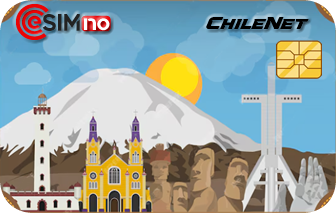
Chile's 4,300-kilometer length means you're rarely in one place for long — and each zone demands mobile data for different reasons. In Santiago, the Metro's seven lines connect 136 stations across the capital, but transfers at Universidad de Chile or Baquedano stations are confusing without real-time transit apps like Citymapper or Moovit. Rideshare apps Uber and Cabify handle airport transfers from SCL to Providencia hotels in 25-40 minutes depending on traffic, and surge-pricing alerts let you time pickups around rush-hour spikes.
San Pedro de Atacama sits at 2,400 meters elevation, and stargazing tour operators like Atacama Desert confirm pickup times via WhatsApp — no phone signal means missed pickups. The ALMA Observatory visitor center and Valle de la Luna tours require QR tickets pulled up on your phone. Farmacias around Plaza de Armas stock altitude-sickness medication, but finding the nearest one without Google Maps is a guessing game.
Puerto Natales and Punta Arenas have solid Movistar 4G coverage, but Torres del Paine's interior is a connectivity dead zone. Download park maps, refugio confirmation PDFs, and weather forecasts from Meteochile while you're still in town. Bus Fernández and Bus Pacheco schedules shift seasonally — live updates on their websites beat printed timetables at Terminal Rodoviario. eSIMno plans for Chile keep you connected in every gateway town so you can book last-minute bunks at Refugio Paine Grande or check ferry crossings to Chiloé.
Valparaíso's hillside ascensores (funiculars) run on irregular schedules — the Ascensor Reina Victoria and Ascensor El Peral have no posted timetables, so locals check arrival times via WhatsApp groups. Uber operates in both Valparaíso and Viña del Mar, and TheFork handles restaurant reservations at seafood spots along the Muelle Barón waterfront. Santiago's Maipo Valley wineries like Concha y Toro require online booking for English-language tours — showing up without a reservation often means waiting hours or missing the slot entirely.
Chile occupies a narrow ribbon along South America's western edge, bordered by the Andes to the east and the Pacific to the west. This geography creates extreme diversity: the Atacama Desert in the north claims the title of driest place on Earth, while Patagonia's glaciers and fjords in the south draw trekkers from every continent.
Santiago serves as the primary international gateway, with Arturo Merino Benítez International Airport (SCL) handling direct flights from Miami, Madrid, Sydney, and São Paulo. The capital's Barrio Lastarria and Barrio Italia neighborhoods offer walkable dining and boutique hotels. Valparaíso, a UNESCO World Heritage port city 120 kilometers northwest, is reachable by Turbus or Pullman Bus from Terminal Alameda in 90 minutes. Puerto Montt anchors the Lake District, with ferry connections to Chiloé Island and flights to Balmaceda for Patagonia-bound travelers.
Torres del Paine National Park draws over 250,000 visitors annually for the W Trek and full circuit — the granite towers and Grey Glacier dominate expedition itineraries. The Atacama's Valle de la Luna, geysers at El Tatio, and world-class observatories like Paranal attract stargazers and photographers. Easter Island (Rapa Nui), 3,700 kilometers offshore, requires a separate LATAM flight from Santiago but rewards visitors with nearly 900 moai statues. Wine regions like Maipo, Colchagua, and Casablanca Valley sit within day-trip distance of Santiago.
December through March brings Southern Hemisphere summer — peak season for Patagonia treks when trails are passable and refugios are fully staffed. Santiago stays mild year-round, with ski season at nearby Valle Nevado and Portillo running June through September. Atacama is a year-round destination, though July-August nights drop below freezing.
Chile's extreme length makes domestic flights essential for multi-region trips. LATAM and Sky Airline operate frequent routes between Santiago (SCL), Calama (CJC) for Atacama access, Puerto Montt (PMC) for the Lake District, and Punta Arenas (PUQ) for Patagonia. Flight times run 2 hours to Calama, 1.5 hours to Puerto Montt, and 3.5 hours to Punta Arenas.
Santiago's SCL sits 17 kilometers from the city center. The Centropuerto and Turbus airport buses run every 10-15 minutes to Los Héroes and Pajaritos metro stations, with fares around CLP 2,000-2,500. Uber and Cabify handle door-to-door transfers in 25-40 minutes depending on traffic. Transvip shared shuttles offer fixed-rate service to specific comunas.
Santiago's Metro is South America's most extensive, with seven lines covering 140 kilometers and 136 stations. The BIP card (tap-to-pay) works across metro, buses, and the Metrotren suburban rail to Rancagua. Valparaíso's historic ascensores connect hillside cerros to the plan (flatland) — Ascensor Artillería and Ascensor Polanco are the most photogenic. Long-distance buses from Turbus, Pullman, and Cruz del Sur connect Santiago to Valparaíso (90 minutes), Viña del Mar (100 minutes), and Puerto Montt (12 hours overnight).
Uber operates in Santiago, Valparaíso, Viña del Mar, Concepción, and Antofagasta. Cabify and DiDi provide alternatives. For Patagonia, Bus Fernández and Bus Pacheco run daily services from Punta Arenas to Puerto Natales (3 hours). Car rental is practical for the Carretera Austral and Lake District, but unnecessary in Santiago where traffic and parking make public transit faster.

 Recommended Recommended | Local SIM / Operator | Roaming | |
|---|---|---|---|
| FEATURES | |||
| Setup time | Few minutes | Store visit + paperwork | Auto |
| No local ID needed | Online checkout | Local ID required | Use home account |
| Speed | 4G/5G | Carrier-grade | Partner-dependent |
| Travel support | English support 24/7 | Mapudungun only | Home carrier hours |
| Keep home number | Dual SIM | Replaces it | Same number |
| Cost predictability | Fixed price | Bills can spike | Bill-shock risk |
| PRICING | |||
Typical pricing | See plans below | — | $12-18 / day Typical day-pass tariff varies by home carrier |
No more SIM kiosks
Skip the airport queues. Install your eSIM at home, activate when you land.

No roaming surprises
Forget the $200 phone bill three weeks after your trip. Plain pricing, no hidden fees.

Keep your home number
Dual-SIM means your physical SIM stays active for calls and texts. eSIM handles only data.

Setup in 2 minutes
Scan QR code, follow on-screen steps, you're connected. Works on any eSIM-compatible phone.


Experience seamless global connectivity with our personal eSIM service. Enjoy faster speeds, wider coverage, and the convenience of online purchasing.

Buy a Data Plan
Search for your destination and pick any data plan
Step 1
Install your eSIM
Easy installation via qr code
Step 2
Activate Your eSIM
Only active when you are ready to use data
Step 3
24/7 Customer Support
Reach our team via WhatsApp and email during business hours. Quick answers to common questions available anytime through our automated assistant.
Immediate delivery
Your eSIM arrives by email within minutes. Install it before you board your flight.
Worldwide Coverage
One eSIM, 160+ countries. Land anywhere and connect instantly — no SIM swapping, no roaming charges.
Check Compatibility
Before buying and installing an eSim, check if your phone supports one
As you feel the need to use eSIM on your phone, the first question that arises is: does your mobile support eSIMs? And do eSIM-compatible devices work in all regions worldwide?
Find helpful information to answer your questions

Refer
A FRIEND
Step into the world of E-SIM, bring your friends and benefit together!