

Quick Facts
- Best for short indoor use
- Airport, hotel, and cafe WiFi in major cities
- Best for moving around
- Mobile data for maps, ride apps, train info, and translation
- Typical free WiFi quality
- Good in major airports, mixed in hotels, inconsistent in public spaces
- Expected traveler spend
- WiFi can be free, while mobile data usually offers better value for full-day use
- eSIMno Networks
- Beeline
WiFi vs Mobile Data in Russia
Here's the honest version: WiFi in Russia is useful, but not something we'd build an entire trip around. In Moscow and St. Petersburg, you'll usually find internet at airports, chain hotels, newer apartments, and many cafes. The problem is the gaps between those places. Those gaps matter when you're trying to find the right metro exit at Ploshchad Revolyutsii, confirm a reservation near Patriarch's Ponds, or message a driver outside Pulkovo.
Mobile data wins on continuity. It keeps working while you're in transit, standing outside a station, or moving between neighborhoods where you don't want to stop for coffee just to get online. If your trip includes train travel, day trips, or frequent address lookups in Cyrillic, data is usually the less stressful option.
A simple rule works well here: use WiFi for heavier tasks indoors, and keep mobile data as your default for navigation and day-to-day travel. If you want that sorted before departure, explore eSIMno plans for Russia and set things up before you land.
How to Connect
- At Sheremetyevo Airport arrival
If you just need to message family or check your hotel address, airport WiFi may be enough for a few minutes. But if you're ordering a Yandex Go ride, checking Aeroexpress timing into Belorussky station, or dealing with a delayed arrival, switch to mobile data right away so you aren't stuck on a login page with luggage in hand. - In a busy market zone like Danilovsky Market or Kuznechny Market
This is where WiFi becomes annoying. Markets are great for lunch and photos, but not for dependable internet. If you're comparing routes, translating menus, or sending your location to friends, mobile data is the better call because you may move between indoor halls and outdoor streets quickly. - During a ferry transfer in St. Petersburg
If you're taking a hydrofoil toward Peterhof or moving around the riverfront near the Admiralteyskaya side, don't count on public WiFi. Boarding areas can be crowded and timing changes happen fast. Keep mobile data active for tickets, weather, and return planning. - At hotel check-in in central Moscow or St. Petersburg
Once you're inside your hotel near Tverskaya, Arbat, or Nevsky Prospekt, test the property WiFi before relying on it. If the signal is weak in your room or asks for repeated logins, keep your eSIM as backup for video calls, banking, and route planning for the next day.
Tips for Staying Online Without Hassle
- Download Yandex Maps or another offline map before long metro days. Station names and exits can be confusing when you're in a hurry.
- Keep your hotel address saved in both English and Cyrillic if possible. It helps with ride apps and asking for directions.
- Use airport or hotel WiFi for large uploads, but keep mobile data ready for transport changes and live navigation.
- If you're taking the Sapsan between Moscow and St. Petersburg, sort your tickets and screenshots before boarding so you aren't depending on a weak moment of signal.
- Older buildings in central districts can weaken indoor WiFi. Test from your room, not just the lobby.
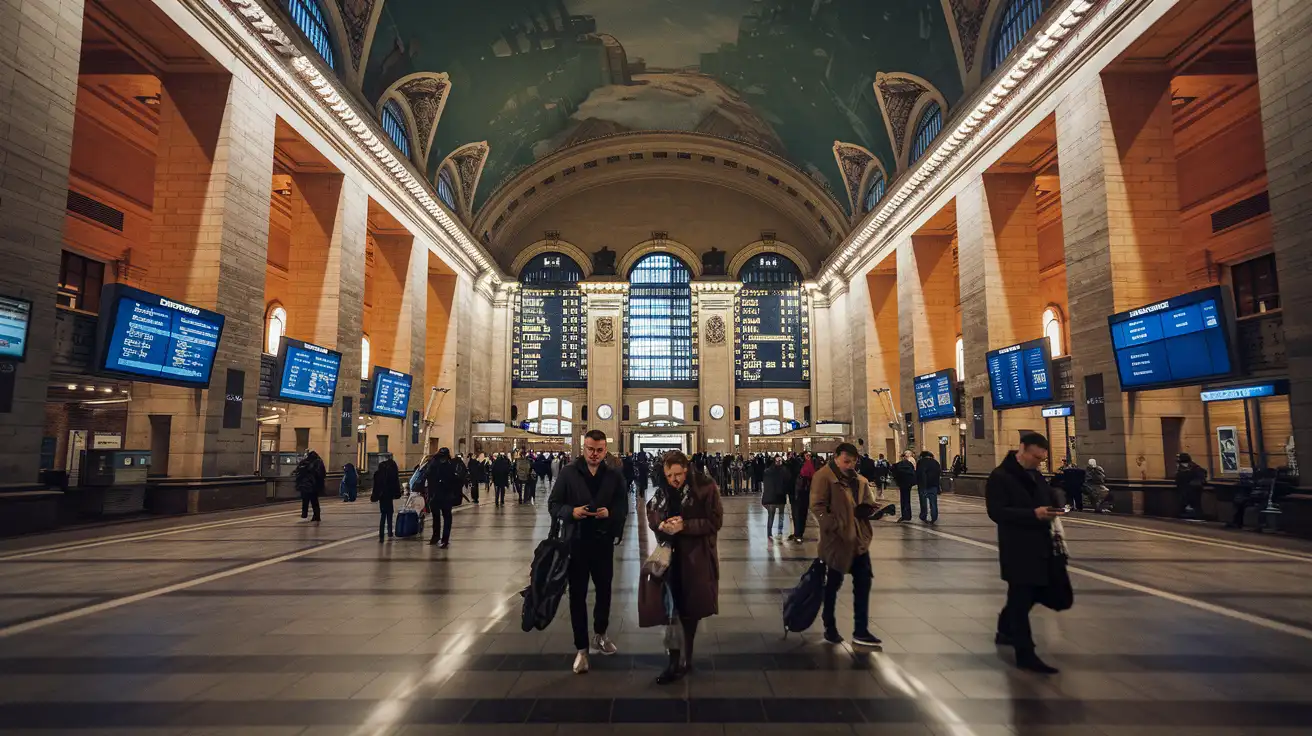
Connected Arrival in Russia
What It Usually Costs
Free WiFi sounds like the budget option, and sometimes it is. If your trip is mostly hotel, meetings, and a few cafe stops, you may spend nothing extra on internet. But for most travelers, the real cost shows up in lost time: waiting for a login page, searching for a stronger signal, or stepping into a cafe just to load a map.
Mobile data is easier to budget because it covers the whole day. Think of it as paying for fewer interruptions. That's especially true if you're moving between airports, stations, museums, and restaurant bookings. We usually suggest this split: use free WiFi for backups and heavier downloads, and use mobile data as your main connection for active sightseeing days.
If you'd rather arrive with that already handled, eSIMno gives you a straightforward way to get connected before your trip starts.
Compare Connectivity Options for Russian Federation
 Recommended Recommended | Local SIM / Operator | Roaming | |
|---|---|---|---|
| FEATURES | |||
| Setup time | Few minutes | Store visit + paperwork | Auto |
| No local ID needed | Online checkout | Local ID required | Use home account |
| Speed | 4G/LTE; 5G in some areas | Carrier-grade | Partner-dependent |
| Travel support | English support 24/7 | Operator shops and call centre | Home carrier hours |
| Keep home number | Dual SIM | Replaces it | Same number |
| Cost predictability | Fixed price | Bills can spike | Bill-shock risk |
| PRICING | |||
Typical pricing | See plans below | — | — |
PRICING — PICK YOUR ESIMNO PLAN
Destination overview
Frequently Asked Questions
Featured eSIM plans
RussiNet

RussiNet
RussiNet
RussiNet
RussiNet
RussiNet
RussiNet
RussiNet