
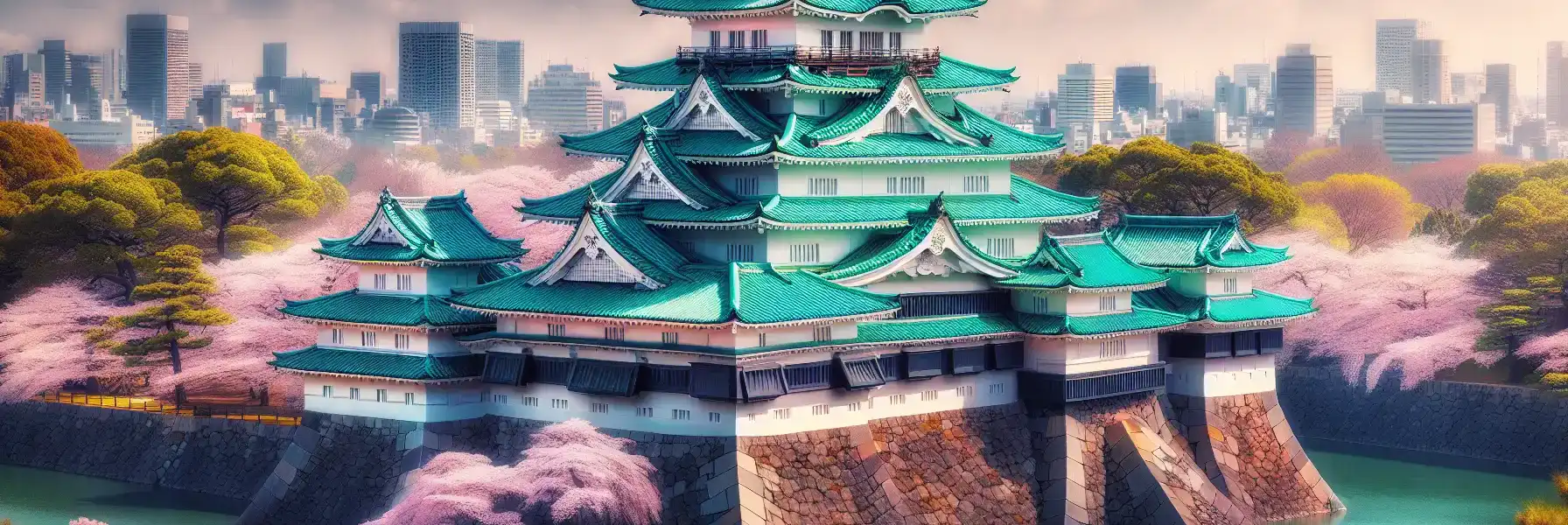
Quick Facts
- Main Keep Hours
- 9:00–17:00 daily (last entry 16:30)
- Admission
- ¥600 adults, free for junior high & under
- Address
- 1-1 Osakajo, Chuo-ku, Osaka 540-0002
- Nearest Station
- Osakajōkōen (JR Loop Line) — 10 min walk
- Park Area
- 105.6 hectares
- Main Keep Floors
- 8 floors (elevator to 5th)
- Official Site
- osakacastlepark.jp
- eSIMno Networks
- KDDI
About Osaka Castle
The story of Osaka Castle begins in 1583, when Toyotomi Hideyoshi — the peasant-born general who would unify Japan after a century of civil war — broke ground on what he intended to be the most magnificent fortress the nation had ever seen. Hideyoshi had inherited the unification campaign from his assassinated lord Oda Nobunaga, and he needed a castle that would project absolute authority. He chose the Uemachi Plateau overlooking the confluence of rivers that controlled access to Japan's inland sea, the same strategic position where Buddhist monks had built the Ishiyama Hongan-ji temple fortress that Nobunaga had besieged for a decade.
Construction mobilized tens of thousands of workers and drained regional lordships of resources. Massive granite blocks were shipped from quarries across the Seto Inland Sea — some weighing over 100 tons — and hoisted into place to form walls that still stand today. By 1597, the castle complex sprawled across multiple baileys protected by concentric moats, with a main tower clad in gold leaf and decorated with gilded tigers and cranes. Contemporary accounts describe visitors approaching through gates so ornate they seemed designed for gods rather than feudal lords.
Hideyoshi died in 1598, leaving his young son Hideyori as nominal ruler under the regency of Tokugawa Ieyasu. The political settlement collapsed within two years, and Ieyasu's victory at the Battle of Sekigahara in 1600 established Tokugawa dominance — though the Toyotomi clan retained Osaka Castle and its surrounding lands. The final confrontation came in the Winter and Summer Sieges of Osaka in 1614–1615, when Tokugawa forces besieged the castle with over 150,000 troops. The complex fell, Hideyori committed suicide, and the Tokugawa shogunate razed the Toyotomi structures to the foundations.
The Tokugawa rebuilt the castle in the 1620s on an even more imposing stone base, but this second iteration suffered its own misfortunes. Lightning struck the main tower in 1665, and the resulting fire left only the stone walls standing. For over 260 years, Osaka Castle existed as a headquarters without its symbolic crown. The Meiji Restoration brought further destruction in 1868, when imperial forces seized the castle from the last shogun and fires consumed most remaining wooden structures.
The current main tower dates from 1931, when the citizens of Osaka raised funds to construct a ferro-concrete reconstruction based on historical paintings of the Toyotomi-era design. This tower survived World War II air raids that destroyed much of the surrounding city, and a major renovation in 1997 upgraded the interior museum and added modern conveniences. While purists note that the structure isn't an original wooden castle, its concrete bones house one of Japan's most comprehensive museums of Sengoku-period history, and several authentic Edo-period structures within the grounds — including the Tamon Yagura turret and Otemon Gate — carry Important Cultural Property designations that attest to genuine historical significance.
Highlights & Must-See
The Main Keep (Tenshukaku)
The eight-story donjon dominates the castle's inner citadel, its exterior faithfully reproducing the Toyotomi-era aesthetic with white plaster walls, green-tiled roofs, and gilded shachihoko — mythical tiger-fish — perched along the gables. The first through seventh floors house the castle museum, while the eighth floor opens onto an observation deck offering 360-degree views across Osaka. On clear days, you can trace the Yodo River north toward Kyoto and spot the distinctive profile of Abeno Harukas, Japan's tallest building, to the south.
The Castle Museum (Floors 1–7)
Rather than displaying rooms as they might have appeared during feudal times, the museum takes a documentary approach to the Toyotomi clan's dramatic history. The fifth floor contains the most significant artifact: a replica of the Osaka Natsu no Jin Zu Byōbu, the folding screen depicting the Summer Siege of 1615 with thousands of individual soldiers rendered in meticulous detail. The seventh floor focuses on Hideyoshi's biography through life-size dioramas and holographic displays that bring the warlord's rise from peasant foot soldier to supreme ruler into vivid focus. Arms and armor associated with the Toyotomi era fill display cases throughout, including reproduction suits of the distinctive gold-lacquered armor Hideyoshi favored.
The Otemon Gate and Tamon Yagura
Approaching from the west via Tanimachi 4-chōme Station, you'll enter through the Otemon Gate complex — one of the authentic surviving structures from the Tokugawa reconstruction. The massive wooden gate frames your first dramatic view of the main keep in the distance, and the Tamon Yagura turret above the gatehouse occasionally opens for special public viewing periods. This is architecture built to intimidate: the stones are deliberately oversized, the corridors designed to confuse attacking forces, the murder holes positioned to rain projectiles on anyone who breached the outer defenses.
The Sakuramon Gate and Takoishi (Octopus Stone)
The southern approach through Sakuramon Gate offers the most photographed angle of the castle — the stone pathway leading toward the donjon with its rooflines stacked against the sky. Just inside the gate lies the Takoishi, a single granite block weighing approximately 130 tons that holds the distinction of being the largest stone in Osaka Castle's walls. The name derives from a supposed resemblance to an octopus, though you'll need imagination to see it. What requires no imagination is the logistical nightmare of transporting this monster from the Seto Inland Sea quarries in the 1620s, a feat that required hundreds of workers pulling it overland on greased logs.
Nishinomaru Garden
The western bailey has been transformed into a landscaped garden containing roughly 600 cherry trees that explode into bloom between late March and early April. This is a separately ticketed area (around ¥200, higher during cherry season), but the entry fee buys you the definitive sakura-and-castle photograph: the main keep framed by pink blossoms with the stone walls reflected in the adjacent moat. During evening illumination events in cherry season, the garden stays open after dark for hanami viewing under artificial lights.
The Stone Walls
Even visitors focused on the main keep should pause to appreciate the engineering of the castle's stone walls. The Tokugawa reconstruction in the 1620s employed the most advanced wall-building techniques of the era, with carefully fitted stones creating surfaces so smooth that ninja infiltration would have been nearly impossible. Walk along the inner moat to observe how the walls curve outward at their bases — a feature called nozurazumi that prevented undermining and made scaling difficult. The walls at Osaka Castle reach heights exceeding 30 meters in places, taller than most castle walls in Japan.
Hokoku Shrine
Tucked within the castle grounds south of the keep, this Shinto shrine dedicated to Toyotomi Hideyoshi offers a quieter counterpoint to the crowds at the main tower. A bronze statue of Hideyoshi in full armor stands at the entrance, and the shrine buildings — though modern reconstructions — provide a space for reflection on the man whose ambition created and ultimately doomed this fortress. The shrine takes perhaps 15 minutes to visit and costs nothing to enter.
The Moats and Turrets
Osaka Castle's double-moat system remains largely intact, and a walk along the outer moat reveals several surviving Edo-period turrets including the Sengan Yagura at the northeast corner. These utilitarian structures lack the drama of the main keep but represent authentic 17th-century military architecture. The moats themselves support populations of koi, turtles, and waterfowl that give the grounds a parkland atmosphere quite different from the fortress's martial origins.
Visit Strategy
Timing Your Arrival
The main keep opens at 9:00, and arriving within the first 30 minutes dramatically improves your experience. By 10:30, tour bus groups begin flooding the museum floors, and the elevator queue — which runs only to the 5th floor, requiring stair climbing above — can stretch to 20 minutes or longer. Early arrival also means softer morning light for photography of the exterior, with the sun illuminating the eastern facade and leaving the western stone walls in dramatic shadow.
Weekdays are noticeably quieter than weekends at any hour. If your schedule allows flexibility, Tuesday through Thursday mornings offer the most relaxed conditions. Avoid national holidays and the Golden Week period (late April to early May) unless you're prepared for festival-level crowds.
Seasonal Considerations
Late March through early April transforms the castle grounds into one of Osaka's premier cherry blossom destinations. The 600 trees in Nishinomaru Garden and hundreds more throughout the park create a pink canopy that draws enormous crowds — but the visual reward justifies the congestion if you time your visit for early morning. Cherry season typically peaks during the final week of March, though exact timing shifts year to year.
Mid-November brings autumn foliage, with ginkgo trees turning brilliant yellow and maples deepening to crimson along the park pathways. Crowds are lighter than cherry season but still significant on weekends.
Summer months (July–August) combine oppressive heat and humidity with school holiday crowds. The keep is air-conditioned, but queuing outside and walking the grounds becomes genuinely unpleasant by midday. If summer is your only option, arrive at opening and complete your visit by 11:00.
Winter (December–February) offers the lightest crowds and crisp, clear skies that improve distant views from the observation deck. The keep closes December 28 through January 1 for New Year.
Ticket Strategy
Standard admission to the main keep costs ¥600 for adults; junior high students and younger enter free. Nishinomaru Garden charges a separate ¥200 (¥350 during cherry season). A combination ticket with the Osaka Museum of History across the moat saves a small amount if you're visiting both.
Holders of the Osaka Amazing Pass — a popular tourist card that covers unlimited subway and bus rides plus entry to numerous attractions — receive free admission to the main keep. If you're spending multiple days in Osaka and plan to visit attractions like the Floating Garden Observatory and Osaka Aquarium Kaiyukan, the pass likely pays for itself.
Recommended Duration
Budget 2–3 hours for a thorough visit. The museum floors require 60–90 minutes to appreciate properly, the observation deck deserves 15–20 minutes, and walking the grounds between the gates adds another 30–45 minutes. Add an hour if you're visiting Nishinomaru Garden during cherry season or plan to explore Hokoku Shrine.
Photography Rules
Photography is permitted throughout the exterior grounds without restriction — tripods, selfie sticks, and even drones (with proper permits) are technically allowed in the open park areas, though drone flights face practical restrictions discussed in the specialized section below.
Inside the museum, photography is permitted on most floors, but flash, tripods, and video recording are prohibited in exhibition halls. The 8th-floor observation deck allows unrestricted photography. Some rotating special exhibitions on the 3rd floor prohibit photography entirely; signage at each entry makes the rules clear.
Accessibility
An elevator runs from the 1st floor to the 5th floor of the keep, making the lower museum floors accessible to visitors with mobility limitations. However, reaching the 8th-floor observation deck requires climbing stairs from the 5th floor — approximately 70 steps with no alternative route. The grounds themselves are mostly paved and relatively flat, though the approach from some stations involves gradual inclines.
Best Time to Visit & Photographer's Guide
Month-by-Month Crowd & Weather
January–February: The quietest period at Osaka Castle. Temperatures hover between 2°C and 10°C, and the bare trees reveal architectural details usually hidden by foliage. The keep closes December 28 through January 1, but opens January 2 for hatsumode visitors paying New Year respects at nearby shrines. Morning fog occasionally settles in the moats, creating atmospheric photography conditions.
March–April: Cherry blossom season peaks in the final week of March through the first week of April, transforming the grounds into one of Japan's most famous hanami destinations. Expect maximum crowds, especially on weekends. Temperatures are pleasant (10–18°C), but rain can disrupt blooming schedules. The evening illumination of Nishinomaru Garden runs nightly during peak bloom.
May–June: A shoulder season sweet spot. Cherry crowds have dispersed, summer humidity hasn't arrived, and fresh green foliage softens the stone walls. Rainy season (tsuyu) typically begins mid-June and brings grey skies and intermittent showers through mid-July.
July–August: Hot, humid, and crowded with domestic school groups on summer holiday. Temperatures regularly exceed 33°C with suffocating humidity. Extended evening hours (until 19:00 during Obon week in mid-August) offer slightly cooler conditions, but summer remains the least pleasant time to visit.
September–October: Heat gradually subsides, though early September remains warm. October brings comfortable temperatures (15–22°C) and clearer skies. Crowds are moderate.
November: Autumn foliage peaks mid-month, with ginkgos and maples creating a golden-and-red palette that photographs beautifully against the white walls and green roofs. Crowds increase on weekends but remain more manageable than cherry season.
December: Quiet weeks before the New Year closure (December 28–January 1). Cool temperatures (5–12°C) and low angles of winter light create dramatic shadows on the stone walls.
Best Time of Day
Sunrise (6:00–7:30): The castle grounds open 24 hours, making dawn photography possible year-round. Winter sunrise paints the eastern facade in warm tones while the rest of the structure remains in cool shadow. You'll share the grounds only with joggers and dog walkers.
Morning golden hour (7:30–9:00): The optimal window for exterior photography before the keep opens. Soft directional light illuminates the tower from the east, and the lack of visitors allows unobstructed compositions from the Sakuramon Gate approach.
Midday (11:00–14:00): Harsh overhead light flattens the architecture and creates strong shadows under the roof eaves. This is the best time to explore the museum interior rather than shoot exteriors.
Afternoon golden hour (15:00–17:00, varies by season): Western light warms the stone walls and creates dramatic contrast. The Nishinomaru Garden position captures the keep with golden backlighting.
Blue hour (17:30–18:30): The castle receives exterior illumination year-round, creating a glowing white structure against deepening blue skies. During extended summer hours, you can photograph from the observation deck as the city lights emerge.
Best Photo Spots
1. Sakuramon Gate Approach: The classic postcard angle — standing on the stone pathway looking north toward the keep with the gate frame cropping the composition. Morning light works best.
2. Nishinomaru Garden: The western garden offers the definitive cherry-blossom-and-castle shot during spring, with the keep framed by sakura branches and the moat providing foreground reflection.
3. Gokurakubashi Bridge: The red bridge over the inner moat provides a slightly elevated perspective with the moat, stone walls, and keep aligned in a single frame. Afternoon light illuminates this angle.
4. 8th Floor Observation Deck: Panoramic views across Osaka, including the Umeda skyline to the north, Abeno Harukas to the south, and the Ikoma mountain range to the east. Glass barriers complicate photography, but finding gaps is possible.
5. Southeast Corner (near Ote-mon approach): A less crowded angle showing the full profile of the keep with multiple turrets visible. Morning light works well.
6. Osaka Museum of History Upper Floors: The museum across the moat offers elevated views of the castle from a distance, framing the keep against the modern city. The 10th floor windows provide the best angle.
7. Inner Moat Pathway (north side): Walking along the inner moat reveals the castle's scale with the massive stone walls rising directly from the water.
Drone & Tripod Rules
Tripods and monopods are permitted throughout the exterior grounds without restriction. Inside the museum, tripods are prohibited on all floors.
Drone flights in Osaka Castle Park require advance permission from the Osaka City park authority, and the practical reality is that permits are rarely granted for recreational photography. The park falls within restricted airspace under Japanese drone regulations due to its proximity to urban infrastructure. Commercial operators occasionally receive permits for official productions, but individual photographers should assume drone flights are not feasible.
Hidden Sub-Spots Most Tourists Miss
Hokoku Shrine Back Garden: Behind the main shrine buildings lies a small garden with stone lanterns and a quieter atmosphere than anywhere else in the castle complex. Most visitors pass the shrine without entering.
Sengan Yagura (Northeast Turret): This surviving Edo-period turret at the northeast corner of the inner moat receives far fewer visitors than the main keep approach. The turret itself is usually closed, but the surrounding area offers peaceful views of the moat and walls.
Plum Grove (Ume-bayashi): East of the main keep, a small grove of plum trees blooms in late February to early March, several weeks before cherry season. The trees are less dramatic than the sakura, but the timing means you'll have them almost to yourself.
Naniwa-no-Miya Ruins Overlook: The archaeological park southwest of the castle marks the site of Japan's 7th-century imperial capital. The grassy expanse offers an unusual angle of the castle from a distance, framed by the Osaka Museum of History.
Moat Boat Pier: The Osaka Castle Park Aqua-Liner riverboat stops at a pier within the park, and the area around the pier provides low-angle views of the castle reflected in the moat that few photographers discover.
Nearby Attractions & Logistics
Getting There
Three train stations serve Osaka Castle Park, each depositing you at a different entrance:
Osakajōkōen Station (JR Osaka Loop Line): The most convenient option for visitors staying near Osaka Station or Tennoji. Exit toward the park's northern entrance and walk approximately 10 minutes through the grounds to reach the main keep. The walk passes JO-TERRACE OSAKA and crosses the outer moat.
Tanimachi 4-chōme Station (Tanimachi and Chūō subway lines): Ideal for approaching through the Otemon Gate on the western side — the most atmospheric entrance route. Allow 15 minutes from the station exit to the keep, passing through the Otemon Gate complex and inner baileys.
Morinomiya Station (JR Osaka Loop Line and Chūō/Nagahori-Tsurumiryokuchi subway lines): Approaches the park from the southeast, useful if you're combining your visit with Osaka Museum of History. Walk time to the keep is approximately 15 minutes.
The Osaka Castle Park Aqua-Liner riverboat also stops at a pier within the park, connecting to Yodoyabashi and other points along the Okawa River — a scenic alternative to the train if weather permits.
Nearby Attractions
Osaka Museum of History: Directly across the southwestern moat, this 10-story museum traces Osaka's history from the Naniwa Palace era through the modern period. Highlights include reconstructed Edo-period merchant streets on the 9th floor and upper-floor windows that frame the castle across the moat. Admission is approximately ¥600, and 90 minutes covers the main exhibits. A combination ticket with Osaka Castle offers a small discount.
Naniwa-no-Miya Park: Adjacent to the Museum of History, this archaeological park preserves the foundations of Japan's 7th–8th-century imperial capital, predating the castle by nearly a millennium. The site is open 24 hours and free to enter — worth 20 minutes for history enthusiasts or photographers seeking an unusual castle angle.
JO-TERRACE OSAKA: A modern dining and shopping complex at the park's northern edge near Osakajōkōen Station. Restaurants range from ramen and tonkatsu to Western-style cafés, making it a practical lunch spot before or after your castle visit. The terrace also offers views across the outer moat.
Hokoku Shrine: Within the castle grounds south of the keep, this Shinto shrine dedicated to Toyotomi Hideyoshi is free to enter and takes 15–20 minutes. A bronze statue of Hideyoshi in armor guards the entrance.
Suggested Itinerary
Begin around 9:00 at the Otemon Gate (arriving via Tanimachi 4-chōme Station), walking through the gate complex and inner baileys while photographing the morning light on the stone walls. Enter the main keep before 10:00 to avoid tour group congestion, spending 60–90 minutes in the museum and observation deck. Exit via the Sakuramon Gate, pausing to photograph the Takoishi stone and the castle's southern profile.
Visit Hokoku Shrine briefly, then walk south to the Osaka Museum of History (allow 90 minutes) and the adjacent Naniwa Palace ruins. Return north to JO-TERRACE OSAKA for a late lunch around 13:00–14:00, completing a half-day cultural circuit centered on the castle precinct.
If you have additional time, the nearby districts of Tennoji (home to Shitennoji Temple, one of Japan's oldest Buddhist temples founded in 593) and Kuromon Ichiba Market (Osaka's famous kitchen market offering fresh seafood and street food) are each reachable in 15–20 minutes by subway.
Why Data Matters at Osaka Castle
The castle grounds sprawl across 105 hectares — roughly 20 times the size of a standard city block — and the park's internal geography can be disorienting without digital maps. Google Maps and Apple Maps both provide accurate walking paths between the various gates, turrets, and the main keep, helping you navigate from your arrival station through the optimal entrance route.
Inside the museum, the official audio guide is available via smartphone app rather than dedicated hardware, requiring an internet connection to stream the multilingual commentary. Translation apps prove invaluable for reading the detailed Japanese signage that accompanies the folding screen replicas and armor displays.
Real-time transit apps like Google Maps or the Japan Transit Planner help you coordinate connections between Osaka Castle and onward destinations — whether that's Dotonbori for dinner, Universal Studios Japan for the following day, or the Shinkansen at Shin-Osaka Station for a day trip to Kyoto. Having reliable data through an eSIMno plan on KDDI's network means you're not dependent on the patchy free WiFi available at some park facilities, and you can share those golden-hour castle photographs while the light is still on your mind.
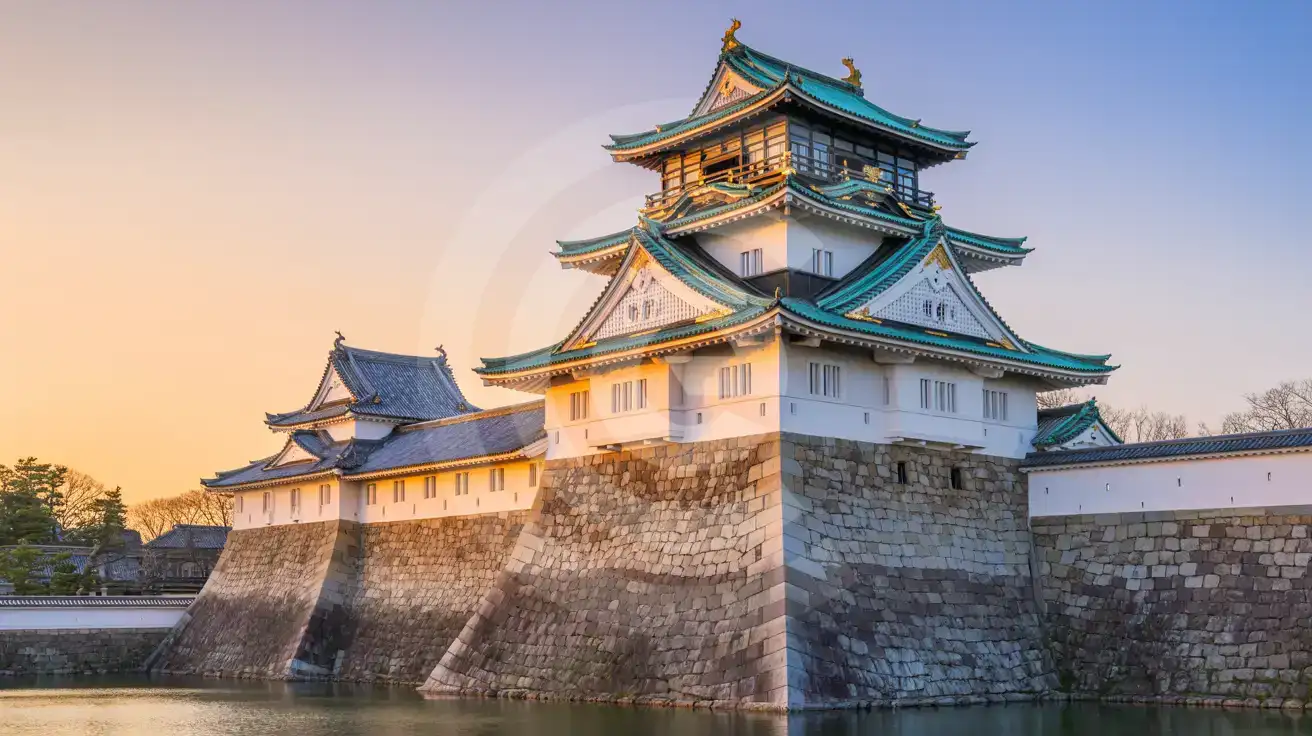
Osaka Castle at Golden Hour
Compare WiFi Options at Osaka Castle
 Recommended Recommended | Local SIM / Operator | Roaming | |
|---|---|---|---|
| FEATURES | |||
| Setup time | Few minutes | Store visit + paperwork | Auto |
| No local ID needed | Online checkout | Local ID required | Use home account |
| Speed | 4G/5G | Carrier-grade | Partner-dependent |
| Travel support | English support 24/7 | {0} only | Home carrier hours |
| Keep home number | Dual SIM | Replaces it | Same number |
| Cost predictability | Fixed price | Bills can spike | Bill-shock risk |
| PRICING | |||
Typical pricing | See plans below | — | — |
PRICING — PICK YOUR ESIMNO PLAN
Destination overview
Frequently Asked Questions
Yes, backpacks are permitted inside the castle museum. There's no bag check or size restriction, though large rolling suitcases would be impractical given the stair climbing required above the 5th floor. Coin lockers are available at the park entrance stations (Osakajōkōen, Morinomiya, Tanimachi 4-chōme) if you prefer to store luggage before your visit.
Photography without flash is permitted on most museum floors. Tripods and video recording are prohibited throughout the interior. The 8th-floor observation deck allows unrestricted photography. Some rotating special exhibitions on the 3rd floor prohibit all photography — signage at each exhibition entrance indicates current rules.
The castle museum provides audio guide content via a smartphone app rather than dedicated hardware. You'll need an internet connection to stream the commentary in English, Chinese, Korean, or Japanese. With an eSIMno data plan, you can access the guide immediately without searching for WiFi hotspots inside the keep.
The castle elevator runs from the 1st floor to the 5th floor only. Reaching the 8th-floor observation deck requires climbing approximately 70 stairs from the 5th floor, with no alternative route. The lower museum floors (1–5) are accessible via elevator, and the exterior grounds are mostly paved and relatively flat.
The ticket counter at the main keep accepts cash (Japanese yen), major credit cards (Visa, Mastercard, JCB, American Express), and IC cards including ICOCA, Suica, and PASMO. The souvenir shop and café on the 1st floor accept the same payment methods. Nishinomaru Garden ticket booth also accepts cards and IC cards.
A small café and souvenir shop operate on the 1st floor of the main keep, offering drinks, light snacks, and Osaka-themed souvenirs. For proper meals, JO-TERRACE OSAKA at the park's northern entrance near Osakajōkōen Station contains multiple restaurants serving ramen, tonkatsu, curry, and Western fare. Vending machines are scattered throughout the park grounds.
Extremely crowded, particularly on weekends during peak bloom (typically late March to early April). Expect long queues for the main keep elevator, packed pathways throughout Nishinomaru Garden, and difficulty finding space for photographs. Arriving at the 9:00 opening on a weekday significantly improves the experience. The evening illumination events draw additional crowds after sunset.
A combination ticket covering both venues is available at either location's ticket counter, offering a modest discount compared to purchasing separately. The combination costs approximately ¥900 versus ¥1,200 for individual tickets (¥600 castle + ¥600 museum). The museum is a 10-minute walk southwest from the castle keep across the outer moat.
Featured eSIM plans
Japan Mobile

Japan Mobile
Japan Mobile
Japan Mobile
Japan Mobile
Japan Mobile