
Quick Facts
- Address
- Vişnezade Mahallesi, Dolmabahçe Caddesi, Beşiktaş, Istanbul
- Nearest Transit
- Kabataş (T1 tram terminus, F1 funicular)
- Hours
- Tuesday–Sunday, 09:00–17:00 (last entry ~16:00); closed Mondays
- Ticket Range
- 650–1,400 TRY for foreign visitors (combined Selamlık + Harem + museums)
- Audio Guide
- Available in multiple languages for additional fee
- Built
- 1843–1856
- Architects
- Garabet Balyan & Nikoğos Balyan
- Facade Length
- Approximately 600 meters
- Official Website
- millisaraylar.gov.tr
- eSIMno Networks
- Türk Telekom, Vodafone
About Dolmabahçe Palace
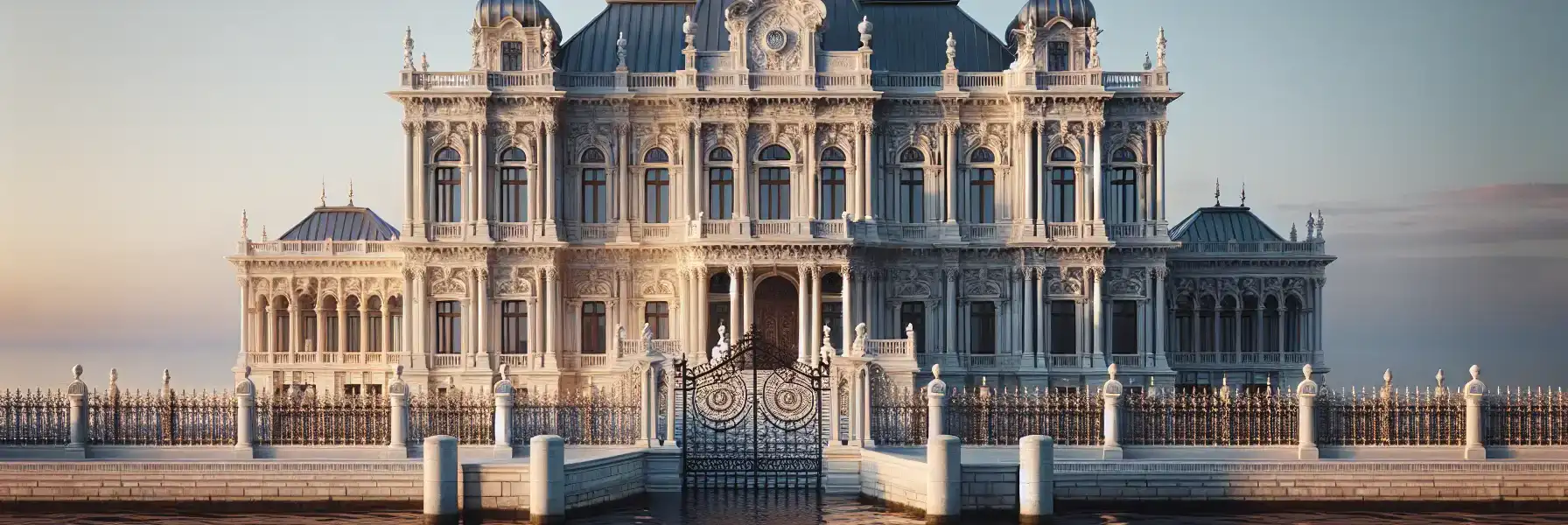
Dolmabahçe Palace rises from reclaimed Bosphorus shoreline in Istanbul's Beşiktaş district — a statement piece so audacious it effectively bankrupted the late Ottoman treasury. Commissioned by Sultan Abdülmecid I and completed in 1856, the palace replaced Topkapı as the principal residence of the empire's final six sultans, marking a deliberate architectural break from classical Ottoman tradition toward the European aesthetics then sweeping continental capitals.
The Balyan Dynasty's Masterwork
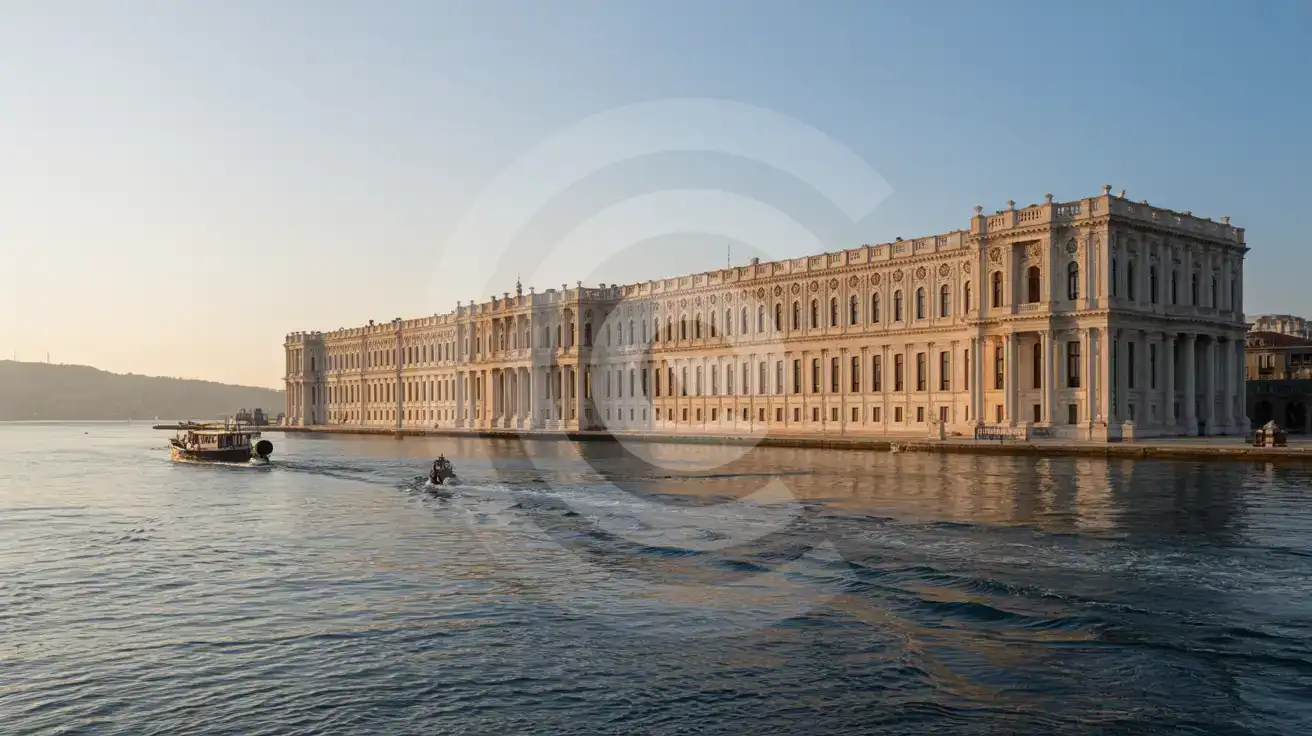
The architects behind this transformation were Garabet Balyan and his son Nikoğos Balyan, members of the Armenian Balyan family who served multiple generations as imperial court architects. Their design synthesizes Baroque curves, Rococo ornamentation, and Neoclassical symmetry with traditional Ottoman spatial hierarchies — the result is a 285-room palace stretching roughly 600 meters along the waterfront, its long façade reflected in the Bosphorus waters that once lapped against a working harbor.
The name itself tells the palace's origin story. 'Dolmabahçe' translates approximately as 'filled-in garden,' referencing the landfill operation that created solid ground from what had been a shallow inlet. Construction consumed around five million Ottoman gold lira — an expenditure so vast it contributed meaningfully to the empire's spiral into foreign debt. The interior decoration alone required approximately 14 tons of gold leaf and significant quantities of Bohemian crystal, Hereke silk carpets, and Sèvres porcelain.
From Imperial Residence to National Memorial
Between 1856 and 1924, Dolmabahçe housed the personal and ceremonial lives of sultans Abdülmecid I, Abdülaziz, Murad V, Abdülhamid II, Mehmed V, Mehmed VI, and finally Caliph Abdülmecid II. The palace witnessed the empire's last decades — constitutional crises, coups, world war, and ultimately dissolution. When the Ottoman sultanate was abolished in 1922 and the caliphate followed in 1924, the building passed to the new Turkish Republic.
Dolmabahçe's significance in modern Turkish identity centers on one date: November 10, 1938. Mustafa Kemal Atatürk, founder of the Republic and the nation's defining political figure, died in Room 71 of the Harem section at precisely 9:05 a.m. The clocks in that bedroom remain stopped at that exact moment, and each year on the anniversary, the nation observes a minute of silence at that time. This convergence of imperial excess and republican mourning gives the palace a layered emotional weight — visitors walk through gilded halls that bankrupted an empire, then stand before a modest bed draped in a Turkish flag where a nation's transformation crystallized into personal loss.
Today the palace operates under the Department of National Palaces (Milli Saraylar), administered by the Turkish Grand National Assembly. While not individually inscribed on UNESCO's World Heritage List, it holds first-degree protected cultural property status and draws visitor numbers second only to Topkapı among Istanbul's historic palace complexes.
Highlights & Must-See
The palace divides into three primary zones — the Selamlık (men's ceremonial and administrative wing), the Harem (private family quarters), and the museum annexes occupying former royal apartments. A standard combined-ticket tour moves through these sections in sequence, though understanding what you're approaching before each room makes the difference between a gilded blur and genuine comprehension.
The Ceremonial Hall (Muayede Salonu)
This is the centerpiece of the Selamlık and arguably the single most photographed interior space in Turkish heritage. The domed throne room rises 36 meters — high enough to induce genuine neck strain — and houses the palace's signature object: a Bohemian crystal chandelier weighing approximately 4.5 tons, fitted with 750 lamps, and often cited as one of the largest crystal chandeliers ever produced. Historical records associate it with a gift from Queen Victoria, though documentation remains debated. The hall served as the venue for bayram (religious holiday) ceremonies and major state receptions, its scale designed to overwhelm foreign ambassadors and domestic subjects alike.
The Crystal Staircase (Kristal Merdiven)
Located in the Selamlık entrance vestibule, this double-horseshoe staircase features banisters crafted from Baccarat crystal, brass, and mahogany. It's the first major interior feature visitors encounter after entering and sets the tone for the extravagance ahead. The staircase curves upward in a design that catches light from surrounding windows, creating a prismatic effect on bright mornings. Photography is typically restricted inside, so absorb it while you can.
Atatürk's Bedroom (Room 71)
Found toward the rear of the Harem section, this modestly furnished room contrasts sharply with the gilded excess surrounding it. The space is preserved exactly as it was at the moment of Atatürk's death — a simple bed draped in the Turkish flag, personal effects arranged on a side table, and the wall clock fixed at 9:05. The room draws particular crowds on November 10 and during national holidays, but even on ordinary days it carries a weight that silences most visitors. Guards enforce a reverent atmosphere.
The Harem Apartments
The private family quarters occupy the palace's eastern section, separated from the Selamlık by a long interior corridor. Key spaces include the apartments of the Valide Sultan (queen mother), which feature some of the palace's finest Hereke carpets, and the Pink Hall (Pembe Salon), a reception room used by the women of the imperial household that offers exceptional Bosphorus views through tall windows. The Harem layout reveals the domestic life behind the ceremonial façade — smaller rooms, more intimate decoration, but still staggering by any non-imperial standard.
The Clock Museum
Housed in the former Crown Prince's quarters, this annex displays Ottoman-era timepieces ranging from pocket watches gifted by European monarchs to elaborate floor clocks with painted faces and gilded cases. The collection spans roughly three centuries of Ottoman timekeeping, offering a mechanical counterpoint to the textile and architectural focus of the main tour.
The Painting Museum
Occupying the Heir Apparent's apartments, this gallery holds a collection of 19th-century paintings heavy on Ottoman court portraiture and Bosphorus seascapes. Look for works by Ivan Aivazovsky, the Russian-Armenian marine painter who spent time at the palace and captured the strait's moods in oil. The collection isn't comprehensive by global standards, but it contextualizes the visual culture of the late empire.
The Seaside Garden & Imperial Gates
The palace grounds stretch between two elaborately carved white marble gates: the Saltanat Kapısı (Imperial Gate) and the Hazine Kapısı (Treasury Gate). Both feature the kind of decorative stonework that photographs well against blue sky, and the waterfront promenade offers an unobstructed view of the palace's long neoclassical façade reflected in the Bosphorus. This is where you'll finally be able to use your phone camera — take your time.
The Medhal Hall
Often overlooked in the rush toward the Ceremonial Hall, this entrance vestibule features ceiling paintings, elaborate moldings, and a floor plan designed to orient visitors before they proceed into the main wings. The detail work rewards a slow look before the crowds push you forward.
Visit Strategy
Dolmabahçe operates on a timed-entry system that rewards strategic planning and punishes spontaneity. Unlike some Istanbul sites where you can simply queue and enter, here the combination of limited group sizes, guided-tour formats, and seasonal crowd surges means your visit quality depends heavily on when and how you arrive.
Best Time to Visit
Mornings immediately after the 09:00 opening offer the smallest crowds and most patient guides. Tuesday and Wednesday are the quietest weekdays, as many tour groups front-load their Istanbul itineraries with Sultanahmet sites early in the week. Weekends, particularly Saturday mornings, see significant domestic visitor traffic — Turkish families treating the palace as a heritage education outing. Cruise-ship arrival days (check Istanbul port schedules if planning ahead) flood the area with large groups between mid-morning and early afternoon.
Seasonally, April through May and September through early October balance comfortable outdoor temperatures with moderate crowds. July and August bring peak international tourism and significant heat, making the garden walks less pleasant. November 10 draws enormous commemorative crowds — meaningful to witness, but not ideal for a leisurely architectural tour.
Ticket Strategy
Tickets are sold by the Department of National Palaces, available at the on-site ticket office or through the official Milli Saraylar website and mobile app. The tiered pricing structure offers separate or combined tickets for the Selamlık, Harem, and museum annexes — the combined full-site ticket (ranging approximately 650–1,400 TRY for foreign visitors as of current pricing) delivers the most comprehensive experience. Müzekart holders (Turkish citizens and residents with the national museum pass) receive reduced rates or free entry depending on the section.
Purchasing tickets online in advance allows you to select a specific time slot, avoiding the physical queue and the risk of sold-out morning slots. Audio guides in multiple languages are available for an additional fee at the entrance — worth considering if you prefer self-paced absorption over guided commentary.
Recommended Duration
Budget 2.5 to 3 hours for the complete experience: roughly 75–90 minutes for the Selamlık tour, another 60 minutes for the Harem, and 30–45 minutes for the museum annexes and garden walk. Rushing through in 90 minutes is physically possible but defeats the purpose — the decorative detail rewards slow observation.
Photography Rules
This is where Dolmabahçe frustrates modern visitors. Photography and video recording are prohibited inside the Selamlık and Harem to protect the textiles, gold leaf, paintings, and historic carpets. Room attendants actively enforce this rule; don't expect to sneak shots. Personal mobile phone use for photos in interior spaces is also restricted. The gardens and exterior courtyards, however, allow unrestricted photography — the waterfront façade shots are yours to capture.
Dress Code & Practical Considerations
Unlike Istanbul's functioning mosques, Dolmabahçe has no religious dress code. However, visitors must wear protective shoe covers (provided at the entrance) inside the palace to protect the historic parquet floors and carpets. Large bags, backpacks, and bulky items must be checked at the cloakroom near the entrance — bring only what you need for the tour. Restroom facilities are available near the ticket office and garden areas.
Crowd Avoidance Tactics
The single most effective move: arrive at 08:45, purchase or retrieve your tickets immediately, and enter with the first group of the day. If you can't make morning slots, late afternoon (after 15:00) sees reduced crowds as tour groups head back to ships and hotels — but this risks missing interior details as natural light fades through the windows.
Site Walk-Through & Photographer's Guide
Dolmabahçe presents a paradox for photographers: some of the most spectacular interiors you'll encounter in Turkey sit behind a strict no-photography policy, while the freely photographable exteriors and gardens offer world-class Bosphorus backdrops. Navigating this divide requires understanding both the enforced tour sequence and the light conditions at different times of day.
Recommended Walk Sequence
Entry is through the Hazine Kapısı (Treasury Gate) on the landward side, where you'll pass security, check large bags, and receive shoe covers. From here, the guided-tour format dictates the sequence: you'll proceed through the Selamlık first, then transit through a connecting corridor to the Harem, and finally exit through the garden toward the museum annexes and the waterfront.
After completing the interior tour, resist the urge to immediately exit. Instead, walk the full length of the seaside garden from the Harem exit toward the Imperial Gate (Saltanat Kapısı), then loop back along the waterfront promenade. This sequence positions you for the best exterior photography with the sun (morning light from the east, afternoon light from the west) and gives you time to decompress from the interior's sensory overload before photographing the façade.
Key Structures to Spend Time At
The Treasury Gate (Hazine Kapısı): Your entry point, featuring elaborate white marble carvings that photograph well against blue sky. Pause here before security to capture the ornamental detail — you won't be able to photograph again until you exit the Harem.
The Crystal Staircase: The Selamlık's first interior landmark. No photos permitted, but study the way Baccarat crystal catches window light — the prismatic effect intensifies on bright mornings.
The Ceremonial Hall: Stand directly beneath the 4.5-ton chandelier and look up. The dome's height (36 meters) creates an optical effect that photographs can't capture anyway; let your memory do the work.
Room 71 (Atatürk's Bedroom): The Harem's emotional anchor. The stopped clock, the flag-draped bed, the modest furnishings — absorb the contrast with everything you've just walked through.
The Pink Hall (Pembe Salon): Position yourself near the Bosphorus-facing windows to understand why this room served as the Harem's primary reception space — the view frames the strait perfectly.
The Imperial Gate (Saltanat Kapısı): The ceremonial land entrance on the garden's southern end, featuring the palace's most elaborate exterior stonework. Best photographed in late afternoon when western light picks out the carved relief.
The Waterfront Promenade: Walk the full 600-meter façade length along the Bosphorus edge. Morning light illuminates the eastern sections; afternoon light favors the western end.
Best Photo Spots & Lighting Times
The money shot — the palace façade reflected in calm Bosphorus water — requires morning conditions: arrive before 10:00 when boat traffic is lighter and the water's surface holds more stillness. Position yourself on the waterfront promenade roughly midway along the façade for a symmetrical composition.
For the Treasury Gate and Imperial Gate details, late afternoon (15:00–17:00) delivers the warm directional light that picks out carved shadows. The seaside garden's formal landscaping photographs best in the 'golden hour' before closing.
One overlooked angle: from the Kabataş tram platform or the adjacent ferry dock, you can capture the palace's full waterfront elevation with the Bosphorus Bridge in the distant background — a compression shot that places the palace in its geographic context.
Restoration & Excavation Status
Dolmabahçe undergoes continuous conservation work given the delicate nature of its textiles, gold leaf, and painted surfaces. Scaffolding occasionally appears on exterior sections, and individual rooms in the Selamlık or Harem may be closed for textile conservation or structural repair. The Clock Museum and Painting Museum have seen recent display updates, with improved lighting and climate control. Check the Milli Saraylar website before your visit for current closure notices — seasonal restoration schedules aren't always predictable.
Souvenirs & On-Site Shopping
The palace gift shop, located near the garden exit, stocks the usual suspects: miniature chandelier replicas, Hereke-style textile reproductions, postcards, and illustrated guidebooks in multiple languages. The guidebooks are worth purchasing if you want detailed room-by-room photography and historical context you couldn't capture during the tour.
Skip the generic 'Ottoman' merchandise (fez hats, mass-produced ceramics) available from street vendors outside the gates — you'll find better quality and prices in the Grand Bazaar or Arasta Bazaar. What's genuinely worthwhile here: the official publications produced by Milli Saraylar, which include archival photography and scholarly commentary not available elsewhere.
Nearby Attractions & Logistics
Dolmabahçe anchors a stretch of the European Bosphorus shoreline that rewards a full day of exploration — Ottoman maritime heritage, contemporary art, and Beşiktaş neighborhood life all within walking distance or a short tram ride.
Dolmabahçe Mosque (Bezmiâlem Valide Sultan Camii)
Immediately adjacent to the palace's southern gate, this mid-19th-century Baroque mosque was commissioned by Bezmiâlem, mother of Sultan Abdülmecid I. Its slender twin minarets and waterfront position make it architecturally distinctive, and the interior's relative simplicity provides a counterpoint to the palace excess you've just exited. A two-minute walk; free entry outside prayer times.
Istanbul Naval Museum (Deniz Müzesi)
About a 10-minute walk south along the coast in Beşiktaş Square, the Naval Museum houses the imperial caïques (royal rowing boats) used by the sultans — some exceeding 30 meters in length, with gilded canopies and dozens of oar positions. Ottoman naval artifacts, weaponry, and maritime paintings fill the upper floors. The mausoleum of Hayreddin Barbarossa, the legendary Ottoman admiral, stands in the adjacent square.
Beşiktaş Waterfront & Fish Market
Roughly 10–12 minutes on foot south of the palace, the Beşiktaş İskele area offers ferry connections to the Asian shore (Üsküdar and Kadıköy), a compact fish market, and casual seafood restaurants along the Çarşı district. Grab a balık ekmek (fish sandwich) from a waterfront stall and watch the ferry traffic.
Istanbul Modern
A tram ride or 25-minute walk south along the Bosphorus, Turkey's flagship contemporary art museum reopened in 2023 in a Renzo Piano–designed building at Galataport in Karaköy. The permanent collection surveys modern Turkish art from the 1870s forward; rotating exhibitions bring international contemporary work. The building itself — cantilevered over the water — merits the visit.
Getting There & Transit Connections
The nearest transit stop is Kabataş, terminus of the T1 tram line. From Sultanahmet (near Hagia Sophia, the Blue Mosque, and Topkapı Palace), the T1 tram runs directly to Kabataş in roughly 25 minutes. From Kabataş, it's a 5–10 minute walk north along the Bosphorus shore to the palace gates.
The F1 Kabataş-Taksim funicular connects the tram terminus to Taksim Square in about 90 seconds — useful if you're staying in Beyoğlu or want to continue to İstiklal Avenue afterward. Several IETT bus lines stop directly at Dolmabahçe along the coastal road.
Suggested Day Itinerary
Arrive at Dolmabahçe by 09:00 for the first Selamlık tour. Complete the Harem and museum annexes by noon (roughly 2.5–3 hours total). Walk to Dolmabahçe Mosque, then continue south to the Naval Museum (about 1 hour combined). Lunch at a Beşiktaş fish restaurant — the Çarşı district options serve fresh catch from the morning market. Afternoon: take the T1 tram from Kabataş one stop south to Tophane, then walk to Istanbul Modern at Galataport and continue along the Bosphorus promenade to Karaköy for evening drinks. This sequence pairs late-Ottoman imperial heritage with maritime history and contemporary Turkish art in a single day along the European shore.
Why Data Matters at Dolmabahçe Palace
The practical moments when mobile data transforms a Dolmabahçe visit accumulate quickly. Purchasing timed-entry tickets through the Milli Saraylar app requires a stable connection — doing this in the taxi from your hotel rather than in the queue saves 20+ minutes on busy mornings. The T1 tram from Sultanahmet doesn't always run to schedule, and real-time Istanbul transit apps (Moovit, Google Maps) help you adjust if delays threaten your entry slot.
Inside the palace, photography is prohibited — but outside, the waterfront façade and Bosphorus backdrop demand immediate sharing. Uploading to cloud storage while walking the gardens means your shots are backed up before you reach the fish market in Beşiktaş. Navigation from the palace to Istanbul Modern at Galataport, ferry schedules to Kadıköy, restaurant reviews for that balık ekmek lunch — all flow easier with consistent connectivity.
An eSIMno plan for Turkey connects you through Türk Telekom and Vodafone networks without hunting for a SIM vendor or negotiating in Turkish. You land at Istanbul Airport, activate via QR code, and have coverage before you clear customs. The palace gardens get strong signal; the interior stone walls don't matter since you can't use your phone there anyway.
The Bosphorus Façade
Compare WiFi Options at Dolmabahçe Palace
 Recommended Recommended | Local SIM / Operator | Roaming | |
|---|---|---|---|
| FEATURES | |||
| Setup time | Few minutes | Store visit + paperwork | Auto |
| No local ID needed | Online checkout | Local ID required | Use home account |
| Speed | 4G/LTE; 5G in some areas | Carrier-grade | Partner-dependent |
| Travel support | English support 24/7 | Operator shops and call centre | Home carrier hours |
| Keep home number | Dual SIM | Replaces it | Same number |
| Cost predictability | Fixed price | Bills can spike | Bill-shock risk |
| PRICING | |||
Typical pricing | See plans below | — | — |
PRICING — PICK YOUR ESIMNO PLAN
Destination overview
Frequently Asked Questions
Featured eSIM plans
Turk Mobile

Turk Mobile
Turk Mobile
Turk Mobile
Turk Mobile
Turk Mobile
Turk Mobile
Turk Mobile