
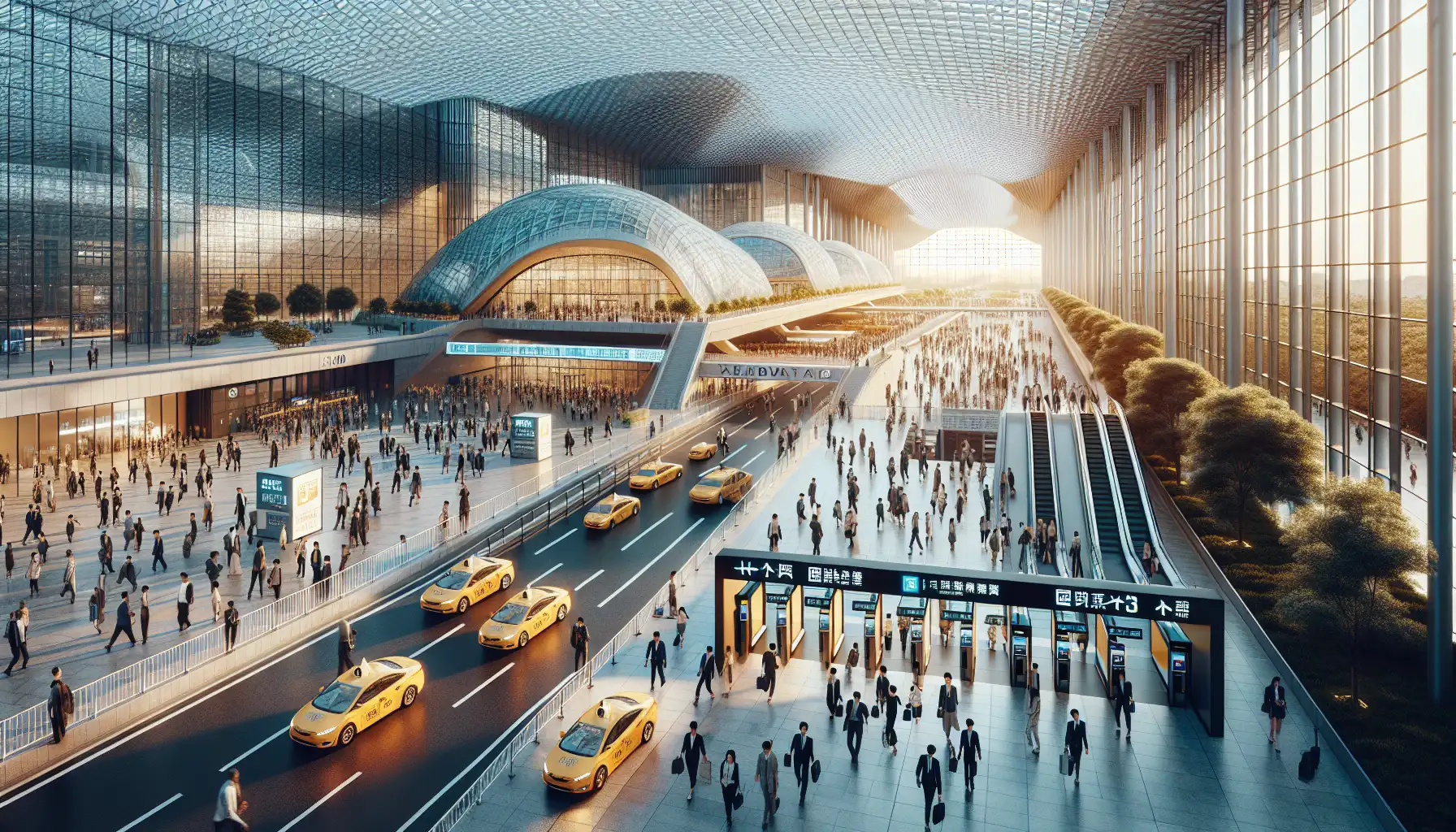
Quick Facts
- Event
- China International Fair for Trade in Services 2026
- Date
- 2026-09-10
- Type
- Expo & Summit
- City
- Beijing
- Likely Venue Base
- China National Convention Center area and wider Beijing event zones
- Best For
- Services trade networking and policy-informed market entry
- Who Goes
- Executives, trade officials, consultants, investors, and business developers
- Nearest Major Airport
- Beijing Capital International Airport
- eSIMno Networks
- China Mobile
Why This Event Matters
CIFTIS is not a casual browse-and-go trade show. It’s one of the biggest places in China to understand how services trade actually moves: finance, digital services, healthcare, logistics, culture, and professional services all show up here in one conversation-heavy setting. If your reason for traveling is to connect with Chinese and international stakeholders in cross-border services, digital trade, and policy-linked business sectors, this fair gives you that mix in a very concentrated form.
What makes it special is the level of institutional weight behind it. This is one of China’s top state-backed international platforms for services trade and business dialogue, so the tone is more strategic than flashy. You’ll get the expo floor energy, yes, but also policy discussion, formal forums, and the kind of meetings where people are testing real market-entry ideas rather than just collecting brochures.
The crowd reflects that. Executives come for partnerships, trade officials for dialogue, consultants for market signals, investors for sector direction, and service-sector business developers for practical leads. If your work sits anywhere near international expansion, regulation, digital services, or B2B cooperation, this is the sort of event where a single afternoon can produce three useful contacts and a much clearer read on where the market is heading.
Getting There and Around on Event Days
For most international arrivals, Beijing Capital International Airport is the straightforward entry point. From there, a taxi or ride-hailing trip is often the easiest if you’re carrying samples, presentation gear, or just don’t want to wrestle with a suitcase before a long expo day. If you prefer rail, Beijing South Railway Station is useful for domestic high-speed arrivals and onward metro connections, especially if you’re combining the fair with meetings in other cities.
For accommodation, the practical choice is to stay near the convention corridor or in business-friendly districts with good road access. The China National Convention Center area works well for short morning transfers. Chaoyang is a solid base if you’ve got dinners and meetings spread across the city, and the CBD around places like Park Hyatt Beijing suits travelers who want polished business hotels and easier evening networking options. If your schedule includes university or innovation meetings, the northwestern side of the city can also make sense, but expect longer cross-city rides.
On event days, build in extra time even if the map says the venue is close. Beijing traffic can bunch up around major event windows, and metro interchanges take longer when everyone is moving at once. If you’re heading out right after the final session, decide early whether you’re taking the metro, a car, or meeting someone nearby for a delayed departure. That one choice can save you a lot of standing around outside the venue refreshing transport apps.
Beyond the Event: Good Detours, Better Meals
If you’ve got a free half-day, 798 Art Zone is a smart contrast to the fair’s formal tone. It gives you contemporary Beijing after hours of conference rooms and panel seating. Mini tip: go later in the afternoon, when the light is softer and the galleries feel less rushed.
Temple of Heaven is another strong pick if you want a reset before a packed networking evening. The grounds are spacious, and it’s a good place to clear your head after back-to-back meetings. Go early if you want a quieter walk and cooler air.
For a classic city view without committing to a full sightseeing marathon, Jingshan Park works beautifully near sunset. The climb is short, and the payoff is that broad look over central Beijing that reminds you just how huge the city really is.
Food-wise, keep it specific. For roast duck, the city does it best when you make it a proper meal rather than a rushed lunch between sessions. If you want a lively evening area, Guijie is a dependable choice for late dining, especially for spicy crayfish, grilled skewers, and busy group dinners. For a more polished post-event meetup, the restaurant scene around Sanlitun is useful when conversations need to continue over cocktails or a longer meal. And if you want something deeply local, try zhajiangmian or a good copper-pot hotpot dinner once the business cards are back in your bag. You can explore eSIMno plans for Beijing before you go, which makes finding reservations, map pins, and last-minute dinner changes much easier.
Staying Connected During CIFTIS
This is where event reality kicks in. Venue WiFi may be fine in a quiet corner and frustrating the moment a keynote ends and everyone starts uploading photos, checking schedules, and messaging contacts. At CIFTIS, your phone is doing more than social media: it’s handling QR ticket or badge access, bilingual communication, live agenda changes, map lookups across large event zones, and transport planning when thousands of people leave at once.
We’d treat mobile data as your working layer, not just a backup. Keep your registration email, QR code, and venue map loaded before you reach the gate. During crowd peaks, use data for group messaging so your team can coordinate hall changes or coffee meetups without waiting on overloaded public WiFi. If you’re sharing booth photos or sending quick follow-up files after a meeting, a stable connection saves time and awkward delays.
Post-event is often the trickiest part. Ride-hailing demand spikes, metro routes get crowded, and people suddenly start changing dinner plans. That’s the moment when reliable data earns its keep. You’re not thinking about connectivity in an abstract way; you’re trying to get from an expo hall to a restaurant, hotel, or station without losing the thread of the day.
How to Connect
- Before the gates open
At your hotel or before leaving Beijing Capital International Airport, open your registration email, save the event QR code to photos, and preload the venue location around the China National Convention Center area. Morning entry moves faster when you’re not hunting through inbox folders at the curb. - At registration and security
Use mobile data instead of depending on crowded venue WiFi for badge confirmation, passport-linked registration messages, or last-minute hall updates. Expo mornings are exactly when shared networks get sluggish. - During crowd peak
Keep your schedule app, translation app, and one map app active. If your team splits across forums or exhibition halls, send a live location pin and a named meetup point inside the venue area rather than vague messages like 'near the entrance'. - For QR scans and business follow-ups
After a useful meeting, you may need to scan a contact QR, open a mini-program, or pull up a company page on the spot. A stable connection helps those quick exchanges happen naturally instead of turning into 'I’ll send it later.' - After the final session
As the venue empties, check metro timing or book your ride before you reach the main exit. Post-event transport in Beijing gets busy fast, especially if you’re heading toward Chaoyang, the CBD, or Beijing South Railway Station for an onward train.
Tips
- Carry a portable charger with enough power for a full refill. Expo days in Beijing often mean constant screen use from 8 a.m. through dinner, especially if you’re scanning codes and messaging contacts all day.
- If you’re arranging meetings with local partners, ask them to send the company name and meeting point in Chinese characters before the event. It makes taxi drop-offs, venue searches, and restaurant arrivals much smoother.
- Build one buffer slot into your afternoon. At CIFTIS, a useful conversation can easily run 20 minutes over, and that extra space is often more valuable than trying to cram in one more hall visit.
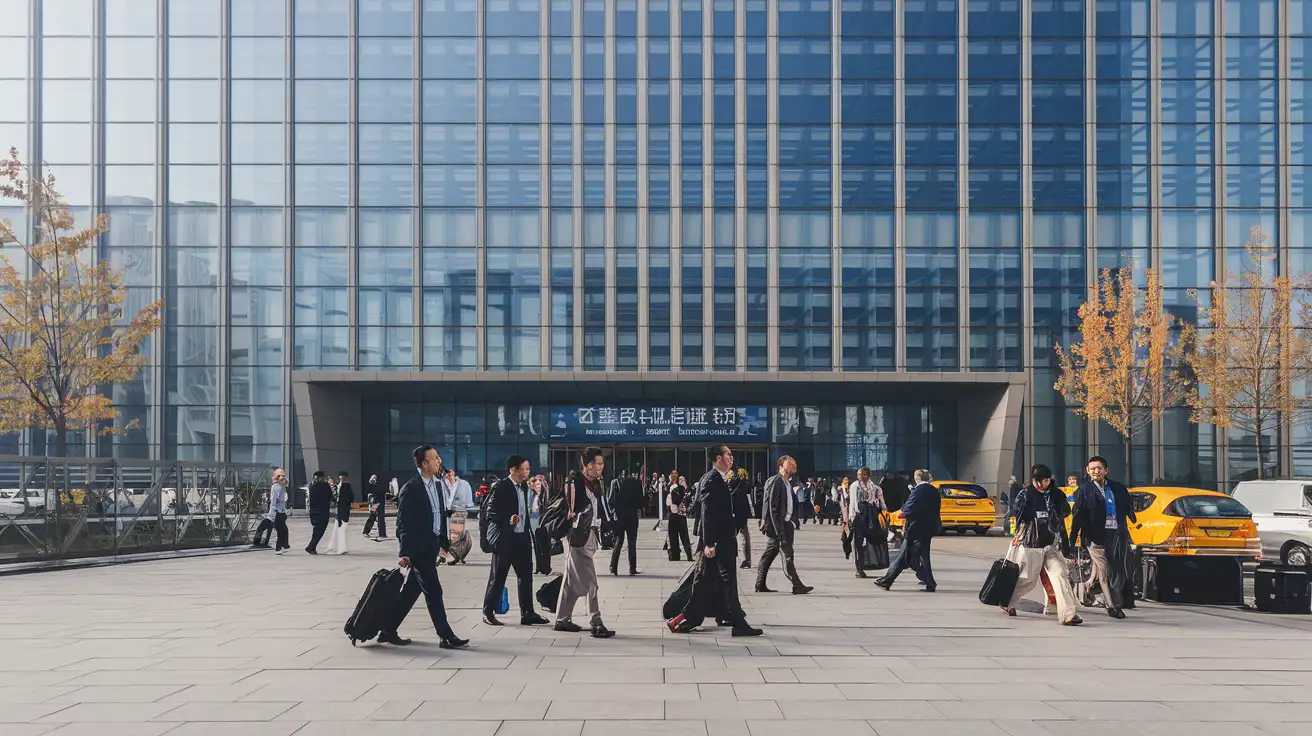
Beijing Expo Day Atmosphere
Compare Internet Plans in China International Fair for Trade in Services 2026
 Recommended Recommended | Local SIM / Operator | Roaming | |
|---|---|---|---|
| FEATURES | |||
| Setup time | Few minutes | Store visit + paperwork | Auto |
| No local ID needed | Online checkout | Local ID required | Use home account |
| Speed | 4G/5G | Carrier-grade | Partner-dependent |
| Travel support | English support 24/7 | {0} only | Home carrier hours |
| Keep home number | Dual SIM | Replaces it | Same number |
| Cost predictability | Fixed price | Bills can spike | Bill-shock risk |
| PRICING | |||
Typical pricing | See plans below | — | — |
PRICING — PICK YOUR ESIMNO PLAN
Destination overview
Frequently Asked Questions
The fair uses major event infrastructure in Beijing, and travelers often plan around the China National Convention Center area and related event zones. Because layouts can vary by year, it’s smart to confirm your exact hall or forum location before departure.
Beijing Capital International Airport is the main practical gateway for many international attendees. From there, taxis and ride-hailing are usually the simplest if you’re heading straight to a hotel near the venue or carrying business materials.
It may work for light use, but expo and summit WiFi often slows down during registration, keynote breaks, and the end-of-day rush. If you need reliable access for QR entry, schedule changes, translation, and group messaging, mobile data is the safer option.
Because CIFTIS is a moving-target kind of day. You may need to scan a QR code at the gate, check a live agenda, message a contact in another hall, translate a venue note, and book transport right after the last session. Those are all time-sensitive phone moments.
The convention corridor is best for short morning transfers. Chaoyang works well if your meetings continue across the city, and the CBD is a strong choice for business hotels, client dinners, and evening networking.
798 Art Zone is great if you want something contemporary, Temple of Heaven is ideal for a calmer reset, and Jingshan Park gives you a quick but memorable city view. They each work well as half-day add-ons around a business-heavy trip.
Yes. That’s usually the easiest way to avoid scrambling at the airport or outside the venue. If you want your phone ready for maps, registration emails, and ride-hailing from the start, you can check eSIMno before departure.
Featured eSIM plans
China Mobile

China Mobile
China Mobile
China Mobile
China Mobile
China Mobile